
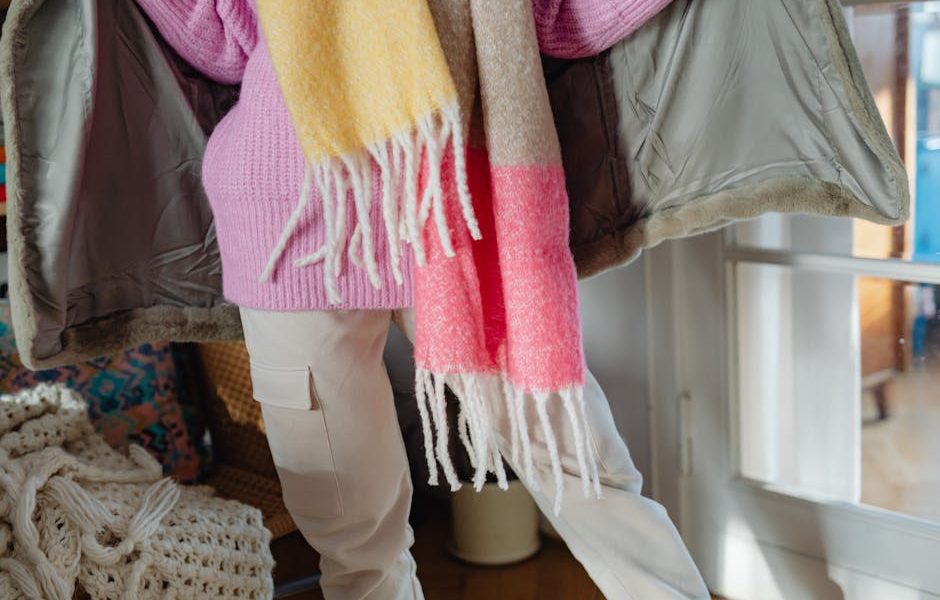
For the majority of adults, the most versatile scarf size is 70 inches (180 cm) long by 12 inches (30 cm) wide. This specific dimension provides enough length for a double wrap or a standard European loop while maintaining a width that does not overwhelm the neckline of a tailored overcoat. Selecting a scarf is not merely a matter of aesthetic preference; it is a calculation of surface area, thermal insulation, and fabric drape. When dimensions are mismatched with the wearer’s height or the garment’s structure, the result is either insufficient warmth or an unmanageable amount of bulk that compromises the silhouette.
Standard Scarf Dimensions for Daily Wear and Functionality
The standard rectangular scarf typically falls within the range of 60 to 75 inches in length. Within this bracket, the 70-inch mark is considered the industry benchmark for a reason. This length allows for the “Once Around” knot, where the scarf is draped over the neck with one end longer than the other, then wrapped once around the neck. For a person of average height (5’6″ to 6’0″), a 70-inch scarf will end near the waistline, providing a balanced look that works with both casual jackets and formal coats. If the length drops below 60 inches, the wearer is restricted to basic drapes or simple knots, which often fail to secure the neck against wind ingress.
Width is equally critical. A standard daily scarf is usually 10 to 12 inches wide. This width allows the fabric to be folded in half lengthwise for added warmth without becoming so thick that it restricts chin movement. In colder climates, a slightly wider scarf—up to 14 inches—might be preferred, but once you exceed this, the scarf begins to transition into the territory of a stole or a wrap. The objective of a standard scarf is to seal the gap between the neck and the coat collar. Excess width in a heavy wool fabric can lead to “neck fatigue,” where the sheer volume of fabric creates discomfort over several hours of wear.
Key Measurements for Standard Styles
- Short Scarf: 50–55 inches. Best for tucking into a blazer; limited knotting options.
- Medium Scarf: 60–70 inches. The standard for versatility; accommodates most knots.
- Long Scarf: 75–85 inches. Ideal for tall individuals or complex, multi-wrap styles.
Oversized Blanket Scarf Measurements for Maximum Insulation

Blanket scarves are defined by their substantial surface area, typically measuring at least 80 inches in length and 25 to 30 inches in width. These dimensions are designed to maximize heat retention by creating multiple layers of trapped air between the fabric folds. From a technical standpoint, the blanket scarf functions as a portable insulator. Because of the increased width, these scarves can be worn over the shoulders like a shawl or wrapped multiple times to create a high-volume cowl that protects the lower half of the face. However, the sheer size requires a careful choice of material to avoid excessive weight.
When selecting an oversized size, the thickness of the yarn is the deciding factor. A 30-inch wide scarf made of heavy, chunky-knit acrylic will likely be too heavy for comfortable daily use and may look disproportionate on smaller frames. Conversely, a 30-inch wide scarf in a fine-gauge wool or cashmere blend provides significant warmth without the restrictive bulk. Data from textile thermal testing suggests that the increased surface area of a blanket scarf can improve perceived warmth by up to 30% compared to standard sizes, provided the fabric is breathable enough to prevent moisture buildup from respiration.
Blanket scarves exceeding 85 inches in length often require specialized knotting techniques to prevent the ends from interfering with the wearer’s gait or becoming caught in zippers.
The Technical Requirements of Formal Evening Scarves and Silk Wraps
Formal scarves serve a different primary function than their winter counterparts. Often made of silk, satin, or fine-gauge wool blends, these accessories are designed for elegance and minimal bulk. The dimensions reflect this: formal scarves are typically narrower, ranging from 6 to 10 inches wide, and shorter, often staying between 50 and 60 inches. The goal is to provide a layer of protection for the shirt collar and neck without obscuring the lapels of a tuxedo or evening coat. Because silk has a high density but low loft, it does not provide the same thermal insulation as wool, making the size less about heat and more about the drape.
In formal contexts, a scarf that is too long (over 70 inches) appears clumsy and breaks the clean lines of formal attire. A shorter 55-inch silk scarf is designed to be draped over the neck without a knot, with the ends tucked neatly into the coat. If a knot is desired, such as a simple overhand tuck, the scarf must be thin enough to lie flat against the chest. For women’s evening wraps, the dimensions shift significantly toward width, often reaching 35 to 40 inches, while the length remains around 70 inches to allow the fabric to be draped over the arms while covering the back.
Comparison of Scarf Types by Dimensions
| Scarf Category | Typical Length | Typical Width | Primary Use Case |
|---|---|---|---|
| Formal/Silk | 50–60″ | 6–10″ | Evening wear, suits |
| Standard Winter | 60–75″ | 10–12″ | Daily commuting, versatility |
| Oversized/Blanket | 80″+ | 20–30″ | Extreme cold, travel |
| Skinny Scarf | 60–70″ | 2–4″ | Fashion/Aesthetic only |
How to Choose Scarf Length Based on Height and Body Proportions

A frequent error in accessory selection is ignoring the physical proportions of the wearer. A universal guideline used by stylists and tailors is that a scarf’s length should roughly correspond to the wearer’s height. For a person who is 5’4″ (64 inches), a 60-inch scarf will appear full-length. For a person who is 6’2″ (74 inches), that same 60-inch scarf will appear short and may be difficult to tie in anything other than a basic drape. When the scarf length is significantly shorter than the wearer’s height, it tends to look like a children’s accessory or a specialized athletic garment rather than a deliberate style choice.
Body breadth also influences how a scarf sits. Individuals with broader shoulders or a larger chest circumference will “consume” more of the scarf’s length when wrapping it around the neck. In these instances, adding 5 to 10 inches to the standard length is advisable to ensure the ends hang at an aesthetically pleasing level. Conversely, petite individuals should be wary of wide, long scarves that can overwhelm their frame, making them appear shorter. For those under 5’5″, a width of 10 inches and a length of 65 inches is often the “sweet spot” that provides warmth without sacrificing the wearer’s silhouette.
Height-to-Length Recommendations
- Under 5’5″: Seek scarves in the 60–65 inch range.
- 5’5″ to 6’0″: The 70-inch standard is optimal.
- Over 6’0″: Look for “extra-long” options between 75 and 82 inches.
Width and Drape: The Impact of Fabric Volume on Neck Comfort
Width is the most overlooked dimension in scarf selection, yet it dictates how the fabric interacts with the neck and chin. A scarf that is too wide for its material weight will bunch up, creating a “neck brace” effect that can be physically restrictive. For example, a heavy 100% wool scarf that is 14 inches wide will be significantly bulkier than a 14-inch cashmere scarf. Cashmere fibers are finer and have a more fluid drape, allowing the extra width to compress comfortably. When choosing a width, consider the collar of the coat you intend to wear most often. A stand-up collar requires a narrower scarf (8-10 inches), while a wide-lapel trench coat can accommodate a wider 12-14 inch scarf.
The concept of “drape” refers to how the fabric falls under its own weight. High-quality natural fibers like merino wool and cashmere have a superior drape, meaning they will settle into the contours of the shoulders and neck. Synthetic fibers, particularly low-grade acrylic, often have a stiffer drape, causing the scarf to stand away from the body. This creates gaps where cold air can enter. Therefore, if you prefer a wider scarf for the aesthetic of a large knot, it is imperative to choose a material with a soft drape to ensure the volume remains manageable and comfortable throughout the day.
Comparing Popular Scarf Models and Their Dimensional Specifications

To understand how these dimensions translate to real-world products, we can look at several market leaders. These models represent the standards for their respective categories, illustrating how brands balance length, width, and material to achieve specific functional goals. Prices are approximate and subject to seasonal fluctuations.
Acne Studios Canada Narrow Wool Scarf
Dimensions: 190 cm x 28 cm (approx. 75″ x 11″)
Approximate Price: $190
Pros: The 11-inch width is ideal for those who find standard scarves too bulky; the 75-inch length allows for sophisticated knotting.
Cons: The 100% wool construction can feel slightly coarse against sensitive skin compared to cashmere blends.
Everlane The Cashmere Scarf
Dimensions: 68″ x 12″
Approximate Price: $95
Pros: Near-perfect standard dimensions for the average adult; high-quality Grade-A cashmere offers excellent drape.
Cons: The 68-inch length may feel slightly short for individuals over 6’2″ who prefer a double wrap.
Johnstons of Elgin Heritage Cashmere Scarf
Dimensions: 180 cm x 25 cm (approx. 71″ x 10″)
Approximate Price: $200
Pros: Exceptional craftsmanship; the 10-inch width is very streamlined and fits perfectly under tailored overcoats.
Cons: High price point per square inch of fabric; strictly a functional neck-warmer rather than a style-statement piece.
Uniqlo Heattech Scarf
Dimensions: 69″ x 10″
Approximate Price: $25
Pros: Highly affordable; the Heattech technology provides surprising warmth for a relatively thin and narrow scarf.
Cons: Synthetic blend lacks the premium drape and longevity of 100% natural fiber options.
Measuring Your Existing Wardrobe to Determine Optimal Scarf Sizing
Before purchasing a new scarf, the most reliable method for determining your ideal size is to measure a scarf you already own and find comfortable. Lay the scarf flat on a hard surface, ensuring there are no folds or bunches. Use a fabric measuring tape to record the length from fringe-tip to fringe-tip and the width across the center. If you find your current scarf feels too short to tie a European loop (folding the scarf in half and pulling the ends through the loop), you likely need to increase your next purchase by at least 10 inches.
Another practical test involves your outerwear. Put on the coat you wear most frequently in winter and measure the distance around your neck, over the collar. A scarf must be at least three times this circumference to allow for a basic wrap-and-tuck. For example, if the circumference around your coat collar is 20 inches, a 60-inch scarf is the absolute minimum length required for functionality. If you prefer the ends of the scarf to hang below your chest, aim for a length that is four times the collar circumference. By using these data-driven measurements, you can bypass the trial-and-error process and select a scarf size that provides both the thermal protection and the aesthetic profile you require.