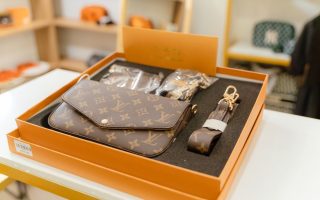
Imagine spending $2,500 on a leather bag because the salesperson described the brand’s Florentine heritage and generations of Italian artisans. Then you flip the tag: Made in Spain. That’s not hypothetical. Several Italian-origin brands shifted production after being acquired by French and American conglomerates — and the heritage pitch stayed the same while the supply chain quietly changed.
The country of origin for a luxury brand and the country where its products are made are two different things. Most shoppers conflate them. Understanding the gap doesn’t make you cynical about luxury fashion — it makes you a sharper buyer of it.
Brand Origin and Manufacturing Location Are Not the Same Thing
Balenciaga was founded in 1919 by Cristóbal Balenciaga in Getaria, a small fishing village on Spain’s Basque coast. He moved the house to Paris in 1937, fleeing the Spanish Civil War. Today Balenciaga is owned by Kering, a French conglomerate headquartered in Paris, with products manufactured across multiple European facilities. Most shoppers call it a French brand. Technically it’s Spanish in origin, French in operation, and global in production.
That compression of identity — founder’s nationality, operating country, manufacturing reality — runs through almost every major luxury house.
Fendi started as a leather goods shop in Rome in 1925 and is now owned by LVMH. Loewe, founded in Madrid in 1846, is also LVMH. Givenchy, founded in Paris in 1952, is LVMH. The group controls over 75 brands across fashion, jewelry, wine, and beauty — and it has absorbed the national origin story of every brand it acquired into a single overarching narrative of luxury.
Some brands hold the line. Hermès, still controlled by the Hermès family, manufactures the overwhelming majority of its leather goods in France. It owns and operates its workshops directly. When a Birkin bag says Made in France, that’s a genuine claim — each bag is hand-stitched by a single artisan who completes the entire construction. The waitlist exists partly because that process genuinely cannot be accelerated without abandoning what makes it worth waiting for.
Others bifurcate their supply chain by price point. Hero products — flagship bags, runway-ready coats — get made in the home country. Entry-level accessories, logo canvas goods, and keychains get made wherever production costs are lower. You can spend $400 on a brand’s starter item and find a quiet Made in China on the back of the label. You can spend $12,000 on the same brand’s top piece and get something genuinely made in an atelier in Lyon. Same brand. Very different realities.
Where the Major Luxury Houses Were Founded
This table covers founding year, origin country, current owner, and headquarters — because all four can be different for the same brand, and most shoppers only know one of them.
| Brand | Founded | Country of Origin | Current Owner | Current HQ |
|---|---|---|---|---|
| Hermès | 1837 | France | Hermès family (private) | Paris |
| Cartier | 1847 | France | Richemont (Switzerland) | Paris |
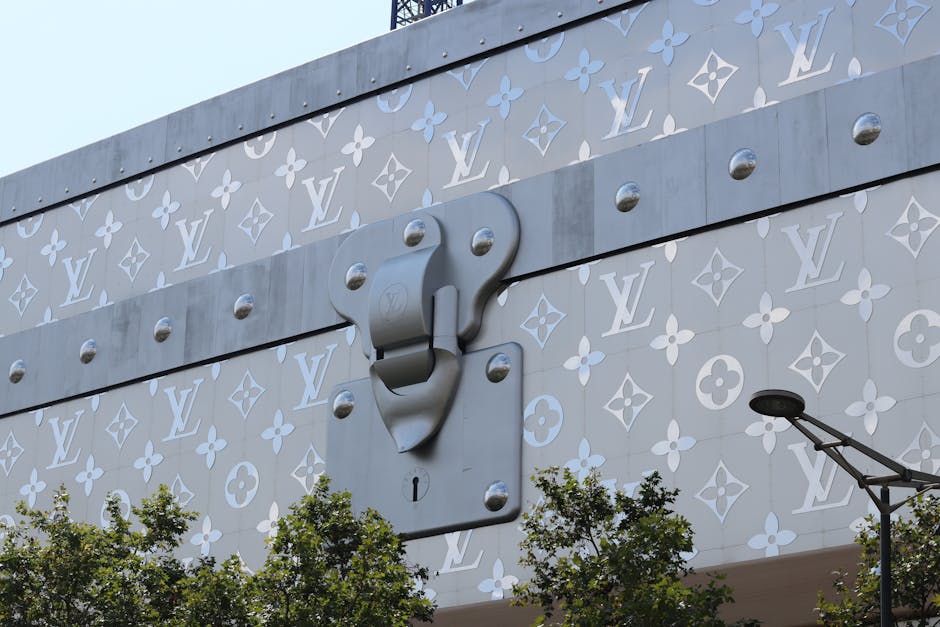
| Louis Vuitton | 1854 | France | LVMH (France) | Paris |
| Burberry | 1856 | United Kingdom | Burberry Group (public) | London |
| Loewe | 1846 | Spain | LVMH (France) | Madrid / Paris |
| Chanel | 1910 | France | Wertheimer family (private) | Paris |
| Prada | 1913 | Italy | Prada Group (Italian-controlled) | Milan |
| Balenciaga | 1919 | Spain | Kering (France) | Paris |
| Gucci | 1921 | Italy | Kering (France) | Milan |
| Fendi | 1925 | Italy | LVMH (France) | Rome |
| Bottega Veneta | 1966 | Italy | Kering (France) | Vicenza |
| Versace | 1978 | Italy | Capri Holdings (USA) | Milan |
| Alexander McQueen | 1992 | United Kingdom | Kering (France) | London |
| Coach | 1941 | United States | Tapestry (USA) | New York |
| Ralph Lauren | 1967 | United States | Ralph Lauren Corp (public) | New York |
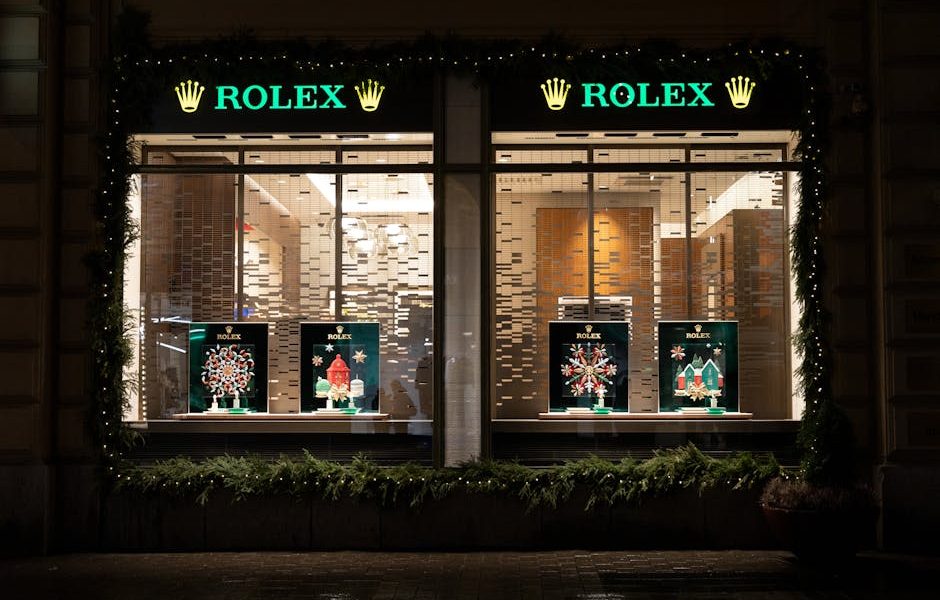
| Rolex | 1905 | Switzerland | Hans Wilsdorf Foundation (private) | Geneva |
Two patterns stand out. LVMH and Kering — both French — now control multiple Italian and Spanish luxury brands that still trade on non-French heritage. And several brands shoppers assume are publicly traded are entirely privately held: Hermès is majority family-owned, Chanel has never had a public offering, and Rolex is owned by a private foundation established after Hans Wilsdorf’s death in 1960.
Why French Luxury Brands Dominate How the Whole Industry Is Perceived
France has one structural advantage that no other country has replicated: a legal definition of haute couture.
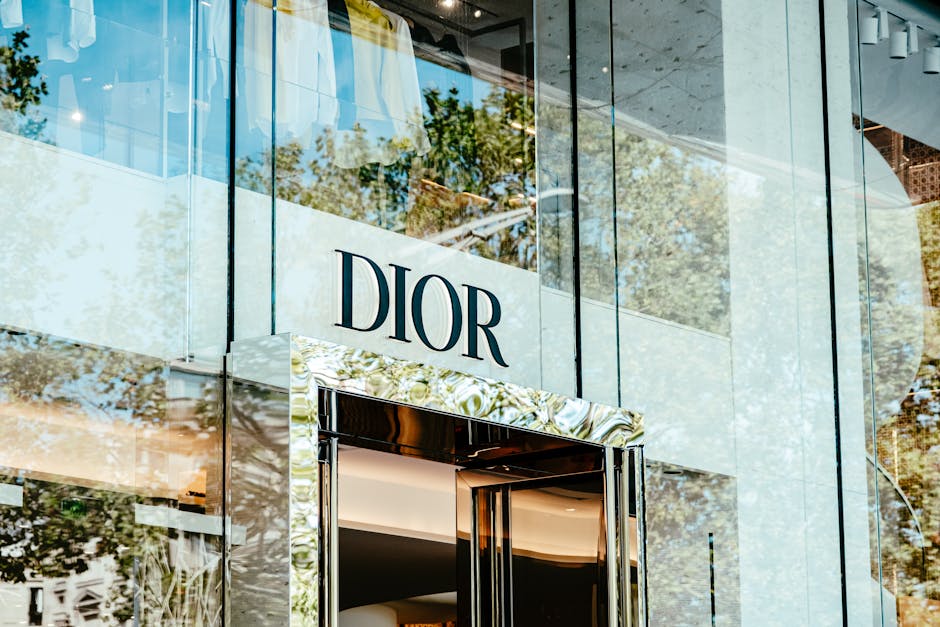
The Chambre Syndicale de la Haute Couture in Paris regulates who can use the term. To qualify in 2026, a brand must maintain a Paris atelier with at least 20 full-time employees, present two seasonal collections per year with a minimum of 50 original looks each, and create garments made-to-order for private clients. Fewer than 15 houses currently meet the standard — including Chanel, Dior, Givenchy, and Valentino, which maintains a Paris atelier despite being an Italian brand.
This legal framework gave French fashion an institutional credibility that predates modern marketing. When Louis Vuitton set up his trunk-making shop on Rue Neuve-des-Capucines in 1854, he was entering a city already purpose-built to celebrate craft: Lyon silk mills two hours south, the grandes maisons of the Rue de la Paix, and a culture of artisan certification the French state actively supported.
LVMH, assembled by Bernard Arnault starting in 1987, understood this ecosystem and built a holding structure around it. The group absorbs brands from any country and brings them under the Parisian luxury umbrella — lending French legitimacy to labels that may have originated elsewhere. Fendi is Roman. Loewe is Madrilenian. Bulgari is Italian. Under LVMH, all of them benefit from association with French luxury prestige in a way that’s commercially powerful even when it’s geographically inaccurate.
Chanel operates differently, and the difference is instructive. It remains privately held, refuses external capital, and has actively acquired small specialist workshops — the feather-maker Lemarié, the goldsmith Goossens, the shoemaker Massaro — to keep its entire supply chain anchored in France. These workshops, called Métiers d’Art, supply Chanel exclusively and preserve techniques that would otherwise disappear. Annual revenue is estimated above $17 billion, sustained without a single public listing. That independence lets Chanel make decisions that conglomerate shareholders would never allow.
The French luxury ecosystem, at its best, is a genuinely thick cluster of accumulated craft skill. At its worst, it’s a brand myth that charges atelier prices for goods produced wherever costs are lowest. The question is always which version you’re buying.
Italian Luxury Makes the Best Products — With One Important Catch
Italian luxury wins on materials and construction when the product is actually Italian. The industrial geography of Italy makes that claim credible in a way no marketing department can manufacture from scratch.
The Santa Croce sull’Arno district in Tuscany produces some of the world’s finest vegetable-tanned leather. The Biella district in Piedmont houses wool mills that have operated for centuries — Vitale Barberis Canonico, one of the oldest, has been weaving since 1663. The Como region still leads global production of printed silk. These are dense industrial clusters with centuries of accumulated knowledge, competing supplier networks, and artisan training systems that Italy’s vocational education infrastructure still supports.
Brunello Cucinelli manufactures 100% of its products in Solomeo, a restored medieval village in Umbria. The founder pays workers above market wages, funds a company theater and library, and treats the business as a long-term cultural project rather than a margin optimization exercise. A cashmere crewneck costs $1,400 to $2,200. That price reflects real Italian labor costs, real Mongolian cashmere, and a production chain that doesn’t outsource to cut corners. It’s among the most transparent operations in luxury fashion.
Prada manufactures leather goods and ready-to-wear in Tuscany at company-owned facilities. Bottega Veneta‘s intrecciato-woven leather goods are still made in Vicenza. These are genuine Italian production stories — but they coexist with brands using the Italian founding narrative while manufacturing abroad. The catch: when an Italian brand is acquired by a foreign conglomerate, production decisions follow shareholder priorities, not heritage commitments. Versace’s 2018 sale to Capri Holdings for $2.12 billion marked a shift in how those decisions would be weighted going forward.
What LVMH and Kering Have Actually Changed About Country of Origin
They’ve turned it from a supply chain fact into a brand story. The heritage narrative stays intact; the atelier location is now negotiable. For most conglomerate-owned brands, French or Italian describes the design aesthetic and founding myth, not the factory address. Quality control at these groups is often rigorous — but the premium you’re paying for heritage isn’t always a premium for geography.
How “Made In” Labels Work — And What They Don’t Tell You

What does “Made in France” legally require?
EU law requires that the label reflects the country where the last substantial transformation of the product occurred. For garments, this typically means the final sewing and finishing. A French brand can source fabric from Portugal, cut pieces in Romania, and stitch the final seams in Paris — and legally label the result Made in France. The label confirms the final production step. It says nothing about where the materials originated or how much of the overall process happened domestically.
Is “Made in Italy” more strictly enforced than other EU designations?
Italy has pushed for stricter interpretation, particularly in leather goods, textiles, and footwear, where the Made in Italy designation commands a significant price premium. Italian law requires that at least two of the four main production phases occur in Italy for goods to carry the label. That’s more protective than the EU baseline, but it still allows substantial overseas production in the remaining phases. A bag where the leather was tanned in China but the cutting, stitching, finishing, and quality control happened in Italy qualifies under Italian law.
What happens when there’s no “Made in” label visible at all?
Country of origin labeling is legally required for goods sold in the EU and the United States. For fashion items, the label is typically sewn inside a seam, attached to a lining, or included on an interior tag. If you can’t find it immediately, look inside every interior pocket, along inner seams, under the collar, and on any attached paper or fabric cards. It must be present by law. If it genuinely isn’t there, ask the retailer before completing the purchase.
Five Things That Actually Matter When Buying Based on Heritage
- The item’s label beats the brand’s story, every time. What the specific piece says Made in is the only legally verifiable answer to where it was made. A brand’s founding narrative is marketing. The label inside the product is a legal declaration.
- Independent brands protect home-country production more reliably than conglomerate-owned brands. Hermès, Chanel, Prada, and Brunello Cucinelli all have structural incentives to maintain domestic production — family control, founder influence, or a brand identity so tied to place that moving production would undermine the core proposition. LVMH and Kering brands face shareholder pressure that can point in the opposite direction.
- Swiss watches are the most reliable origin category in all of luxury. The Swiss government’s Swissness legislation, updated in 2017, requires that at least 60% of production costs for a movement occur in Switzerland. Rolex, Patek Philippe, Audemars Piguet, and Omega all genuinely manufacture in Switzerland, and the designation is enforced with a rigor that the fashion industry’s Made in labeling simply does not match.
- American luxury is underpriced relative to its quality. Ralph Lauren’s Purple Label suits, manufactured in Italy under Ralph Lauren’s direct supervision, are cut and sewn to a standard that exceeds many European brands at comparable prices. Coach’s Rogue and Tabby bags use full-grain leather that holds up better than their price points suggest. They’re cheaper partly because they lack European mystique — and that’s a pricing inefficiency worth using to your advantage if you’re buying for quality rather than status signaling.
- The brands worth paying a heritage premium for are the ones that still manufacture where they were founded. Hermès in France. Brunello Cucinelli in Umbria. Rolex in Geneva. These brands charge real premiums for real reasons rooted in real geography. Every other brand requires more scrutiny before you decide the heritage story justifies the price tag attached to it.