How to Build a Grilled Vegetable Spread That Finishes Together
It is 4:30 on a hot August afternoon. Guests arrive in 90 minutes, the grill is heating, and a pile of zucchini, corn, peppers, and onions is waiting on the counter. The easiest plan is not one giant vegetable mix. It is a cooking order built around size, moisture, and heat.
Start 45 minutes before serving with the vegetables that take the longest, then add quick-cooking pieces in waves. This keeps firm vegetables from staying raw while delicate ones turn soft and black.
Start with the vegetables that need the most heat
Cut dense vegetables into pieces no thicker than 1 inch. Halve small red potatoes, slice eggplant into 3/4-inch rounds, and cut large onions into wedges that still hold their layers together. Toss them with enough oil to coat the surface, but do not let them sit in a puddle. Excess oil drips into the fire and creates bitter smoke.
Put potatoes, carrots, and thick onion wedges on the hottest part of the grill first. Give them 4 to 6 minutes per side, then move them to a cooler zone to finish. Add corn and bell peppers after about 15 minutes. Zucchini, yellow squash, asparagus, and cherry tomatoes belong near the end because they soften quickly.
Use a two-zone fire and a batch order
A two-zone fire means one side has direct heat and the other side has gentler indirect heat. On a gas grill, set one burner to medium-high and leave another burner low or off. On a charcoal grill, bank the coals on one side. This setup gives you a place to brown vegetables and a place to finish them without burning the outside.
Make three batches: firm vegetables, medium vegetables, and quick vegetables. Keep each batch on a separate tray so you do not mix raw and cooked food. Season lightly before grilling, then add lemon juice, herbs, feta, or a fresh dressing after cooking. Acid added too early can make some vegetables tough, while wet sauces drip and burn.
What Vegetables Grill Best in August?
The best August vegetables for grilling are the ones that hold their shape, have enough moisture to stay juicy, and taste better after light charring. Corn, peppers, zucchini, eggplant, onions, and mushrooms are the safest choices for a mixed crowd. They do not need complicated marinades, and most can cook in under 15 minutes.
Use this timing chart for a mixed grill
| Vegetable | Cut | Heat | Approximate time | Done when |
|---|---|---|---|---|
| Corn | Whole ears, husked | Medium-high | 12-16 minutes | Kernels are bright and lightly blistered |
| Bell peppers | Halves or wide strips | Medium | 10-14 minutes | Skin is charred and flesh is tender |
| Zucchini | Lengthwise halves | Medium-high | 6-9 minutes | Grill marks show and center still feels firm |
| Eggplant | 3/4-inch rounds | Medium | 8-12 minutes | Center is soft but not collapsing |
| Red onion | 1-inch wedges | Medium | 10-15 minutes | Layers are tender with browned edges |
| Asparagus | Whole spears | Medium-high | 4-7 minutes | Spear bends slightly but stays crisp |
Pair vegetables by texture, not color
Build each serving platter with one firm, one juicy, and one smoky vegetable. Try corn with zucchini and red onion, or eggplant with peppers and cherry tomatoes. This gives guests different textures and keeps the plate from tasting like one large pile of oil-coated produce.
For a party of eight, plan on 6 to 8 cups of raw vegetables if you are serving them as a side dish. Increase that to 10 cups when grilled vegetables are the main vegetarian option. Reserve a small portion of each batch before adding spicy sauce so children and guests with mild tastes have an easy option.
What Is the Easiest Way to Grill Vegetables for a Crowd?
The easiest method is to prep everything before the fire starts, cook in three timed batches, and finish with one dressing. That system cuts down on last-minute chopping and prevents the grill from becoming crowded.
Should you marinate vegetables before grilling?
Use a short coating instead of a long marinade for most summer vegetables. For 2 pounds of produce, mix 3 tablespoons of olive oil with 1 teaspoon of kosher salt, 1/2 teaspoon of black pepper, and 1 teaspoon of smoked paprika. Toss the vegetables immediately before grilling. Add garlic, lemon juice, vinegar, or fresh herbs after cooking so those flavors stay bright.
Mushrooms and eggplant can handle 20 to 30 minutes of marinating because they absorb liquid quickly. Zucchini and tomatoes need far less time. If they sit in a wet mixture for an hour, they release water and steam instead of browning.
How do you stop vegetables from drying out?
Keep pieces thick enough to retain moisture. Cut zucchini into halves instead of thin coins, and leave mushroom caps whole. Turn vegetables only once or twice. Constant flipping prevents good grill marks and can tear soft surfaces.
Move cooked vegetables to a shallow platter instead of stacking them in a deep bowl. Steam trapped between layers makes the bottom pieces limp. Cover the platter loosely with foil for no more than 5 minutes. After that, leave it uncovered and add a spoonful of dressing just before serving.
Can you grill vegetables ahead of time?
Yes. Grill firm vegetables up to two hours before the meal and serve them at room temperature. Keep quick vegetables closer to serving time because asparagus, zucchini, and tomatoes lose their texture faster. If you need to reheat them, use a hot grill for 60 to 90 seconds per side rather than a microwave.
Which Grilled Vegetable Mistakes Ruin an August Cookout?
My verdict: most grilled vegetable disasters come from excess moisture, uneven cuts, or too much heat. Fix those three problems before the food reaches the grate, and the rest becomes much easier.
Fix these five errors before guests arrive
- Overcrowding the grate: Leave at least 1/2 inch between pieces. Crowded vegetables trap steam and cook pale instead of browned. Work in batches if needed.
- Cutting everything the same size: A thin zucchini slice and a thick potato wedge cannot finish together. Group vegetables by cooking time and give dense pieces a head start.
- Adding wet sauce too early: Barbecue sauce, honey, and sugary glazes burn quickly over direct heat. Brush them on during the final 1 to 2 minutes or serve them at the table.
- Using the highest heat for every vegetable: High heat is useful for corn and peppers, but it can burn onion edges before the center softens. Use medium heat for thick or sugary vegetables.
- Skipping a clean, dry surface: Wet vegetables slide, steam, and stick. Pat them dry after washing, especially mushrooms, tomatoes, and eggplant.
Know when to skip the grill
Do not force every vegetable onto the grate. Leafy greens, very small peas, and watery cucumber slices usually perform better in a cold salad. Sweet potatoes and whole beets can take 35 to 60 minutes, so roast them earlier or choose a faster vegetable when the cookout schedule is tight.
Also skip delicate vegetables if the grill is already full of burgers, chicken, or sausages. A crowded cooking surface makes temperature control harder and increases the chance of undercooked meat near the vegetables. Use the grill for the vegetables that benefit from smoke and char, then prepare the rest indoors.
Which Tools Make Grilled Vegetables Easier?
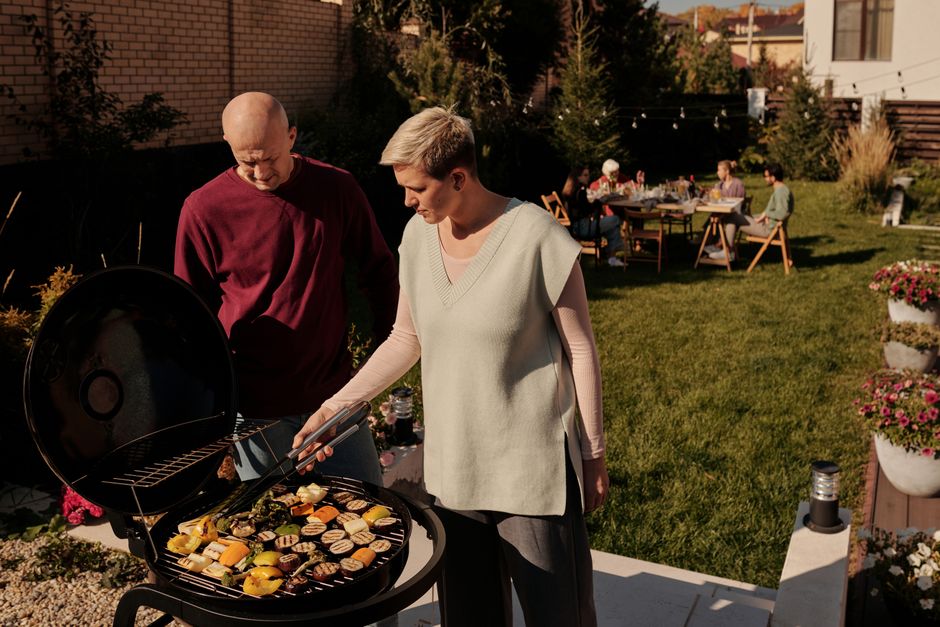
My pick for a low-stress August cookout is a two-zone grill, wide tongs, and a fast-read thermometer. You do not need a large collection of gadgets. The right three tools solve the common problems: not enough space, vegetables falling through the grate, and food sitting too long over hot coals.
Best basic setup for a charcoal cookout
The Weber Original Kettle Premium 22-inch charcoal grill costs about $219 and provides 363 square inches of cooking space. That is enough room for a family-sized vegetable spread, although you will need batches if you are feeding more than 10 people. Its lid helps finish thick onions and potatoes after they receive direct heat.
Add the Weber Deluxe Grilling Basket, model 6435, at about $29.99. Its roughly 11.7-by-9.7-inch surface keeps asparagus, mushrooms, cherry tomatoes, and sliced peppers from dropping into the coals. Use a single layer when you want browning; a full basket works better for softening vegetables without losing small pieces.
Choose tools that fix a specific problem
OXO Good Grips 16-Inch Locking Tongs cost about $17.95 and give you enough reach to turn vegetables without putting your hands over the heat. The 16-inch length also makes it easier to lift a hot foil tray or move a pepper half without piercing it.
The ThermoWorks Thermapen ONE costs about $115 and gives a reading in roughly one second. You do not need it to test zucchini, but it helps when the same grill is cooking chicken alongside the vegetables. For a lower-cost heat buffer, the Lodge 12-Inch Cast Iron Skillet costs about $29.90 and can sit on the cooler side of the grill to finish potatoes, onions, or mushrooms.
Buy the basket if small pieces are your main problem. Buy the long tongs if turning food feels awkward. Buy the thermometer if vegetables share the grill with meat. For a simple family cookout, the tongs and a two-zone fire deliver the biggest improvement for the least money.