
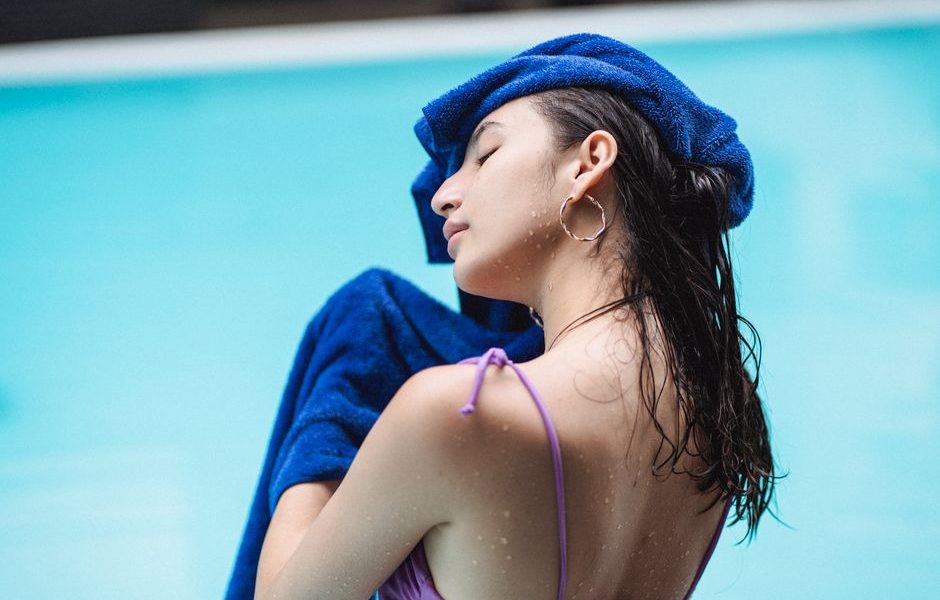
The green tint that appears in blonde pool hair usually comes from copper, not chlorine. Chlorine helps oxidize that copper, which then grabs onto porous hair and leaves the familiar green cast. I learned this after years of swimming, trying random masks, and discovering that a good rinse routine matters more than an expensive repair product.
The goal after swimming is simple: remove pool water quickly, reduce rubbing while the hair is wet, and replace lost slip with conditioner. A treatment can help damaged strands, but no mask can make hours of chlorine exposure disappear.
Why swimming makes hair dry, rough, and easy to break
Chlorine changes the surface of the hair
Hair is made from overlapping cuticle cells. Clean water makes those cells lie fairly flat, while pool chemicals, salt, sweat, and repeated wetting can leave the surface rougher. Rough hair catches on itself. That creates tangles, frizz, dullness, and more breakage when you brush it.
Chlorine also strips some of the oils that help hair bend without snapping. The effect becomes more obvious on bleached, colored, curly, or naturally porous hair because that hair already has a less protected surface. This is why the same pool can leave one swimmer feeling fine and another with straw-like ends.
Green hair is a mineral problem
Chlorine gets blamed for green hair because the color appears after pool exposure, but copper usually supplies the color. Copper can come from pool chemicals, plumbing, or the water itself. Oxidation helps the copper attach to light or porous strands. A regular moisturizing shampoo may improve softness while leaving the green cast behind.
That distinction changes the routine. A quick rinse handles fresh pool water. A chlorine-removing cleanser handles chemical residue. A mineral treatment helps when copper buildup has already changed the color. My first rule is to solve the residue problem before buying a repair mask.
How to rinse your hair after every swim

Use this six-step routine
- Rinse immediately. Stand under fresh, lukewarm water for 60 to 90 seconds. Move your fingers through the roots, behind the ears, and under the nape so trapped pool water does not sit against the hair.
- Press out water gently. Do not twist the length into a rope. Wet hair stretches more easily, and twisting creates tension exactly where the strands are weakest.
- Shampoo the scalp first. Use enough cleanser to reach the scalp and let the lather run through the lengths. Wash a second time only when you still smell chlorine, used heavy styling products, or swam for a long session.
- Condition from the ears down. Leave conditioner on for three to five minutes. Use your fingers or a wide-tooth comb to work through knots from the ends upward.
- Dry with pressure, not friction. Wrap the hair in a soft towel or cotton T-shirt and press. Rough towel rubbing creates tangles before styling even begins.
- Use low heat. If you blow-dry, keep the dryer moving and use a low or medium setting. Letting the hair stay wet for hours can also make it feel limp and tangled, so aim for mostly dry rather than soaking wet.
How often should you use a deeper treatment?
For one casual swim each week, a good rinse, shampoo, and conditioner may be enough. For three or more swims weekly, add a richer conditioning treatment once a week, especially on the mid-lengths and ends. More is not better here. Daily heavy masks can flatten fine hair, leave curls coated, and make the scalp feel dirty.
My preferred order is removal first, moisture second, repair third. That order prevents the common mistake of covering chlorine and minerals with a thick mask. If the hair still feels rough after two or three careful washes, then add a targeted treatment rather than piling on more conditioner.
Which swimmer hair products are worth buying?
I do not think every swimmer needs a special product. A normal gentle shampoo and conditioner can work for an occasional dip, especially when you rinse right away. A dedicated swimmer product earns its place when you swim several times a week, notice chlorine odor after washing, or see green, dull, or unusually tangled hair.
| Product | Size and listed price | Best use | My verdict |
|---|---|---|---|
| UltraSwim Chlorine Removal Shampoo | 7 fl oz; usually about $8 | Frequent pool swimmers who want a basic chlorine-removing wash | Best low-cost starting point for routine pool exposure |
| Malibu C Swimmers Wellness Shampoo | 9 fl oz; $17.98 | Chlorine, bromine, salt, and mineral buildup | My pick for regular swimmers who want a more targeted cleanser |
| Malibu C Swimmers Wellness Remedy | 1 packet; $3.98 | Visible mineral buildup or green-looking blonde hair | Best occasional add-on, not a daily shampoo |
| K18 Leave-In Molecular Repair Hair Mask | 50 mL; $75 | Bleached, colored, or chemically treated hair that already feels weak | Best repair purchase, but it does not remove pool residue |
My clear winner for most regular swimmers
For someone swimming two to four times a week, I would buy the Malibu C Swimmers Wellness Shampoo before buying a luxury repair mask. The 9 fl oz bottle costs more than basic shampoo, but it targets the problem created by pool exposure. If your budget is tight, UltraSwim is the sensible first purchase. It has a 7 fl oz bottle, is made for use after swimming, and is easier to justify than a $75 treatment.
When the expensive product makes sense
K18 makes sense only after the hair has been cleaned and still feels weak from bleach, color, heat, or chemical services. Its 50 mL mask costs $75, so I would not buy it for ordinary dry ends caused by one holiday swim. If you have untreated hair that simply feels rough after the pool, spend that money on a better conditioner and a wide-tooth comb instead.
Five post-swim mistakes that keep causing damage
My strongest opinion: most swimming hair problems come from timing and friction, not from a lack of expensive products.
- Waiting until bedtime to rinse. Chlorinated water keeps drying on the hair while you travel, eat, and run errands. Rinse at the pool or as soon as you get home. A 60-second rinse is better than a perfect routine four hours later.
- Using a harsh clarifying shampoo after every swim. Clarifying shampoo can remove buildup, but repeated use may leave already dry hair squeaky and rough. Buy a swimmer-specific cleanser for frequent use, and save a stronger clarifying wash for occasional buildup.
- Assuming every green tint is a moisture problem. Conditioner can soften the hair without removing copper. For green-looking blonde or highlighted hair, use a mineral-focused treatment such as Malibu C Swimmers Wellness Remedy according to the package directions. Do not use it as a daily wash.
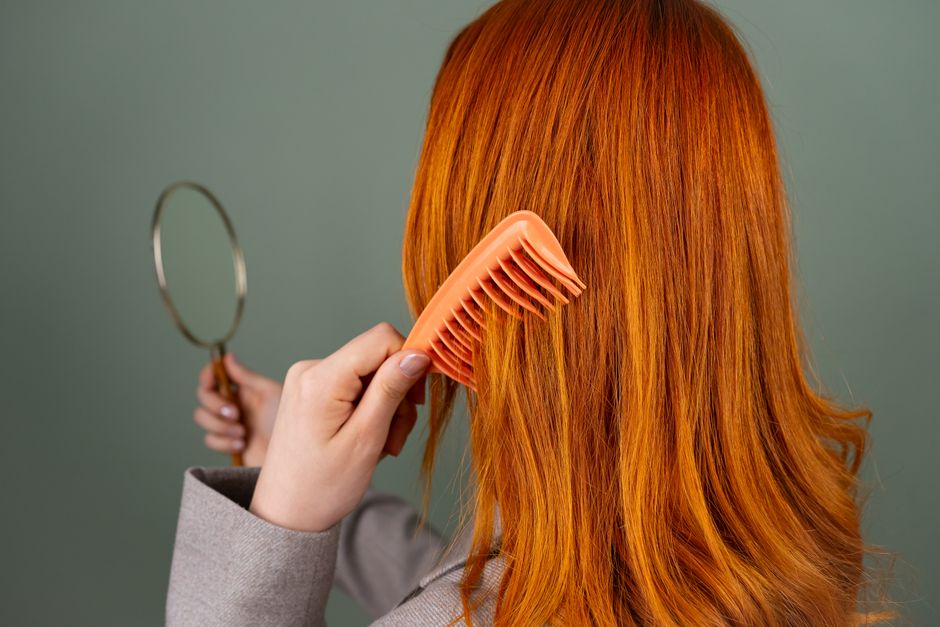
- Brushing aggressively while the hair is dripping wet. Start at the ends, hold the section above the knot, and work upward. A wide-tooth comb gives you more control than a fine brush.
- Buying a repair mask before fixing the cause. K18 can be useful for damaged, bleached hair, but it is not a chlorine remover. If your main complaint is pool smell or residue, buy UltraSwim or Malibu C first.
- Ignoring color-treated hair. Bleach and permanent color make the surface more porous. Keep the rinse immediate, use cooler water, and reduce hot-tool styling on swim days. If the hair snaps, mats, or develops a persistent color change, stop adding products and ask a stylist to assess the damage.
When not to buy a swimmer shampoo
Do not buy a dedicated chlorine cleanser for an occasional swimmer who rinses quickly and has healthy, untreated hair. A gentle everyday shampoo may do the job. The special product becomes worthwhile when exposure is frequent, the odor remains after washing, or the hair feels coated and rough.
Common questions about hair care after swimming
Is rinsing with water enough after swimming?
Sometimes. If you took a short swim, rinsed within a few minutes, and your hair has no chlorine smell or rough feeling, water may be enough before your next normal wash. Regular swimmers should cleanse more often because a rinse dilutes pool chemicals but does not always remove everything that has attached to the hair.
How often should I use a mineral treatment?
Use a treatment only when buildup is a real problem, not as a daily habit. Malibu C lists its Swimmers Wellness Remedy for at least weekly use, with directions to shampoo and rinse first, dissolve the crystals with water, leave the mixture on for two to five minutes, and rinse again. Follow the current package directions, and pay attention to its caution for white or non-pigmented hair.
What is best for bleached hair?
Bleached hair needs the most careful routine: rinse quickly, cleanse gently, condition every time, and keep heat low. If the strands remain weak after the pool residue is gone, K18 is my pick over buying several random masks because it is designed as a short leave-in repair treatment. Apply it only as directed, and do not mistake repair for protection from future chlorine exposure.
Does saltwater need the same routine?
Saltwater still deserves a fresh-water rinse because salt can leave the hair dry and tangled, but it is not the same problem as chlorine and copper buildup. A mild shampoo followed by conditioner is usually enough for occasional ocean swimming. Add a swimmer-specific cleanser when the hair feels coated, smells strongly of pool chemicals, or spends most days in chlorinated water.
The single most important takeaway is to rinse your hair immediately after swimming, then remove residue before trying to repair the damage.


