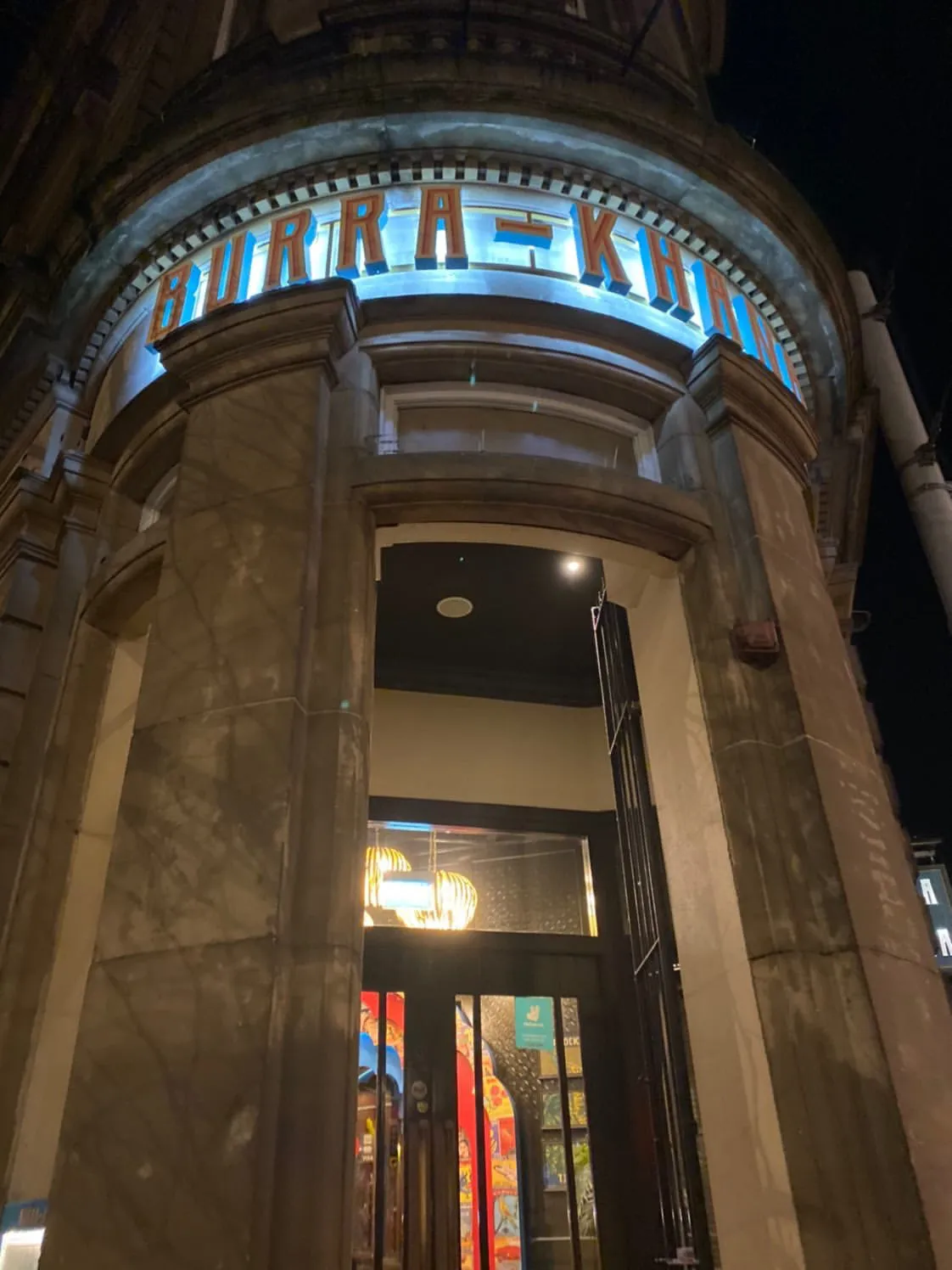
I’ve worked through most of Nottingham’s Indian restaurants over the past several years. The majority follow the same format — tikka masala, balti, biryani, poppadoms at the start. Burra Khana is doing something genuinely different, and understanding exactly what takes a moment to explain properly.
Why Indian Street Food and Indian Restaurant Food Are Two Completely Different Traditions
The curry house format that dominates Indian dining in the UK traces its roots to Bangladeshi and Punjabi cooking that arrived here in the 1960s. Rich, slow-cooked gravies. Large portions built for groups. Food designed to sit in steel pots and stay warm through an entire evening service. That’s a legitimate tradition with genuine history — but it has nothing to do with what you’d eat standing at a chaat counter on Chowpatty Beach in Mumbai or at a roadside dhaba outside Chandni Chowk in Old Delhi.
Indian street food is built around immediacy. The defining example is pani puri: hollow crisp shells filled with spiced chickpeas and potato, flooded with ice-cold spiced water right before you eat. You put the entire thing in your mouth at once. Cold water against chilli heat, tamarind adding sour, chaat masala adding that sharp mineral note — everything lands simultaneously in about three seconds. Serve it restaurant-style with the water in a small jug on the side and you’ve broken the dish at its core.
Most UK attempts at street food take the names, approximate the flavors, and eliminate the technique. They end up on sharing boards at £9 per portion, sitting under a heat lamp for ten minutes before they reach the table. Soggy puri. Textureless bhel puri. Chaat that’s technically assembled but experientially dead.
Burra Khana — the name translates roughly as grand feast in Urdu — is trying to avoid exactly this. The focus is on assembly-to-table speed and getting the balance of sweet, sour, spicy, salty, and the sharp funk of chaat masala right in every dish. The intention is correct. Whether execution consistently matches that intention is what the rest of this piece addresses.
The Chaat Family: Five Flavors, Dozens of Dishes
Chaat is a category, not a single dish. The word comes from a Hindi verb meaning to lick — as in, food so good you’d lick the plate clean. What holds the whole family together is a five-flavor architecture: sour from tamarind chutney, sweet from date chutney, heat from green chilli, salt, and the specific sharp note of chaat masala, a spice blend built around dried mango powder, black salt, and roasted cumin.
Within that framework the dishes diverge significantly:
- Bhel puri — puffed rice, chickpea vermicelli (sev), diced onion and tomato, both chutneys. Has a roughly ninety-second window before the rice absorbs the chutney and goes soft. Eat it immediately.
- Dahi puri — hollow shells, spiced potato and chickpea filling, thick yogurt, both chutneys, more sev on top. The yogurt adds richness and a temperature contrast that bhel puri doesn’t have.
- Aloo tikki chaat — spiced fried potato patties as the base, topped with chole (chickpea curry), chutneys, and the full chaat assembly. More substantial, better for cold weather.
- Samosa chaat — crushed samosa underneath the standard chaat treatment. This is the format that turns a decent samosa into something excellent. The logic is sound.
Get the chaat masala blend wrong and every dish in this family tastes flat. Get the tamarind proportion off by even a small amount and the whole balance tilts. It’s a technically demanding category that looks simple and absolutely is not.
Kathi Rolls: The Kolkata Original vs. What Most Menus Serve
Nizam’s restaurant in Kolkata claims to have created the kathi roll in 1932. The original format: flaky layered paratha with beaten egg cooked onto one side, wrapped around spiced meat with raw onion and green chutney inside. The egg forms a grease barrier that stops the meat juices saturating the paratha. That detail is structural engineering, not decoration.
Most UK versions use plain roti or chapati instead. Roti has minimal fat; paratha is built from layers of ghee. Different fat content means different texture, different holding ability, completely different eating experience. Paratha has a crisp exterior with a soft layered interior that holds fillings properly without disintegrating. Burra Khana uses layered paratha, which is the correct call and immediately separates their rolls from most competitors in the city.
What to Order at Burra Khana: A First Visit Breakdown
Skip the menu paralysis. Here’s the sequence I’d recommend, in order of what to prioritise.
- Dahi Puri (~£5-6) — Start here. Six small puris with spiced chickpea and potato filling, thick yogurt, both chutneys, and a proper hit of chaat masala. This is the diagnostic dish. If the balance is right here, the kitchen knows what it’s doing. Eat each puri immediately after it’s assembled — don’t let them sit, don’t stop to photograph them first.
- Chicken Kathi Roll (~£7-8) — Best value item on the menu and the easiest entry point for anyone new to this style of food. Spiced chicken tikka, egg-coated paratha, raw red onion, green chutney. Filling enough as a standalone lunch. The paratha quality is what justifies the price over a standard chicken wrap from anywhere else.
- Vada Pav (~£4-5) — Mumbai’s answer to the burger: a spiced potato fritter in a soft white bun with dry garlic chutney. The garlic chutney is the variable that makes or breaks this dish. It should be roasted and punchy, not raw and harsh. This version gets the balance right.
Order in rounds, not all at once. Street food portions are intentionally small and timing matters. Place an order for two or three items, eat them, then order more. Placing a full table order simultaneously means your dahi puri assembles, sits on the pass, and starts deteriorating while the rest of the food is being prepared. That defeats the entire point of eating here.
- Pav Bhaji (~£7) — Buttered spiced vegetable mash (potato, cauliflower, peas, tomato) with soft white bread rolls toasted in a medically questionable amount of butter. This is Mumbai comfort food. It works particularly well in autumn and winter when Nottingham is cold and grey and you want something dense and warming.
- Samosa Chaat (~£5-6) — Crushed samosa base with chickpea curry, both chutneys, yogurt, and sev. Better than a plain samosa by a significant margin. Order this if you’re uncertain — it’s the lowest-risk introduction to chaat logic and consistently well-executed.
What to skip on a first visit: anything listed as a main course gravy dish. Burra Khana’s strengths are chaat and rolls. Ordering a curry dish here is asking a specialist to do generalist work and then being disappointed by the result.
A note on spice: medium at Burra Khana is not the medium you’re used to from a standard UK curry house. The baseline heat is noticeably higher. If you’re sensitive to chilli, say so and ask for a specific adjustment — a good kitchen will reduce the green chilli content without removing all flavor. Asking for mild and then complaining it tastes flat is a different problem.
Burra Khana vs. Other Indian Options in Nottingham
Nottingham’s Indian restaurant scene concentrates around Maid Marian Way, Derby Road in Lenton, and parts of the Alfreton Road corridor. The majority operates in standard curry house format. Here’s where Burra Khana actually sits in that landscape:
| Venue | Best For | Price Per Head | Street Food? | Good for Large Groups? |
|---|---|---|---|---|
| Burra Khana | Chaat, kathi rolls, solo or pair lunch | £12–18 | Yes — the main point | Small groups only (2–4) |
| Cumin (Maid Marian Way) | Sit-down dinner, special occasions | £22–30 | No | Yes, up to 10+ |
| Laguna Tandoori (Derby Road) | BYO curry night, budget groups | £14–20 | No | Yes |
| Generic fast casual Indian | Quick budget lunch, biryani box | £7–11 | Loosely | No |
The verdict is unambiguous: Burra Khana fills a specific gap that nothing else in Nottingham city centre currently fills. Cumin and Laguna Tandoori are both better choices for a proper sit-down group dinner — they have the space, the full menu range, and the format for that kind of meal. Burra Khana is not competing with those restaurants and would lose if it tried. It does one thing well, and locally, it is the only venue doing it at all.
Is Street Food Actually Cheaper Than a Curry House?
Not necessarily — and this catches people off guard. Individual dishes at £5-8 add up faster than a single curry house main at £13. A complete meal at Burra Khana — two chaats, a kathi roll, a soft drink — runs £15-20 per person. A starter plus main at Laguna Tandoori lands at roughly £16-22. The prices are broadly comparable.
The real comparison is what you’re getting for the money. Burra Khana offers freshness, technical execution, and a flavor register that doesn’t exist elsewhere in Nottingham. Curry houses offer leisurely dining, larger portions, bread, and a table you can occupy for two hours without pressure. Different experiences at similar prices. For a weekday solo lunch, Burra Khana wins clearly. For a group of six celebrating a birthday, go to Cumin.
The Ordering Mistakes Worth Knowing Before You Go
Why Do First-Timers Get the Format Wrong?
Because the menu looks like a restaurant menu, people apply restaurant logic to it. They order one item each, sit down expecting a substantial plate, and receive a small chaat that disappears in four bites. That’s not a failure of the food — it’s a format mismatch. Street food is grazing food. Order three to four items per person across two or three rounds and budget accordingly from the start.
What Is the Single Worst Mistake You Can Make?
Ordering pani puri for sharing. This dish only works one way: the vendor fills each shell and hands it directly to you, one at a time, and you eat it immediately. Shared pani puri assembled on a plate with the spiced water poured over all of them at once is broken by design — by the time the third shell reaches the second person, it has collapsed and the water has saturated the base. If you’re with a group, order individual portions sequentially. Each person gets their own plate and eats it while the rest of the table waits thirty seconds. It costs slightly more and produces the actual experience rather than a soggy approximation of it.
Does the Time of Day You Visit Matter?
Yes. Peak lunchtime — roughly 12:30 to 1pm — is when assembly speed drops and dishes can sit longer than they should before reaching the table. Arriving at noon or at 1:30pm means faster service and better timing on the chaat. This is true of most chaat-focused kitchens generally. The food format requires individual attention on each order, and that’s harder to give during maximum occupancy.
When Burra Khana Is the Wrong Choice
If you need a long relaxed meal with a full drinks menu, space for a group of eight or more, and the kind of dinner you’d take a client or a parent to — go somewhere else, specifically Cumin. Same applies if anyone in your group specifically wants tandoori dishes, saag paneer, or garlic naan. Those things are not here and asking for them misses the point. And if you have a genuine capsaicin sensitivity rather than just a mild preference, street food as a format works against you throughout — green chilli is embedded in chutneys, masalas, and marinades across the entire menu, not a garnish that can be removed from the side of a plate.
- Best for solo weekday lunch: Burra Khana — dahi puri + kathi roll, roughly £13-14
- Best for group dinner (6+): Cumin on Maid Marian Way — full table service, £22-30 per head
- Best budget curry night with a group: Laguna Tandoori (Derby Road) — BYO, mains around £12
- Best single dish to order first at Burra Khana: Dahi puri — clearest test of whether the kitchen is on that day
- Biggest mistake to avoid: Ordering shared pani puri and letting assembled chaat sit on the table before eating it