Is Chao Chao actually worth the trip, or is it another trendy pan-Asian concept with better lighting than food?
That’s the question anyone researching Nottingham restaurants will land on eventually. The city’s Asian dining scene has matured significantly in recent years — you’re no longer stuck choosing between a high-street Chinese buffet and a perfunctory sushi counter. Chao Chao – Urban Oriental Kitchen sits at the front of that change. It occupies a specific lane: modern sharing-plate Asian food in a properly designed room, aimed squarely at the group dinner and occasion-night market.
Sitting in a lane and owning it are different things. Here’s an honest assessment of what Chao Chao does well, where it falls short, and exactly what you should order — and avoid — before you commit to a booking.
What Chao Chao’s Menu Is Actually Doing
Is this traditional Chinese food or something else entirely?
Chao Chao is explicit about its identity from the name down. “Urban Oriental Kitchen” doesn’t promise regional Chinese authenticity or traditional Japanese precision. What it promises — and largely delivers — is a modern, pan-Asian sharing plate experience that draws from Chinese, Japanese, and Southeast Asian cooking without being rigidly committed to any single tradition.
The closest London equivalent is Bao or Xu. The closest Nottingham equivalent is Kushi-Ya on Bromley Place, which takes a similar small-plates approach but anchors harder into Japanese flavour and skewer cooking. Chao Chao is more freely pan-Asian. Some diners find that liberating — there’s real range on the menu. Others find it slightly frustrating if they came expecting something more defined. That gap in expectation explains a chunk of the negative reviews online.
The menu structure matters before you arrive. It divides into cold plates and raw dishes, steamed and fried small plates (the bao and dim sum section), and larger wok and noodle mains, with a dessert section at the tail. The intention is clear: order across all categories, share everything, eat broadly rather than deeply. That format rewards tables of four or more and works less well for couples.
The dishes worth ordering
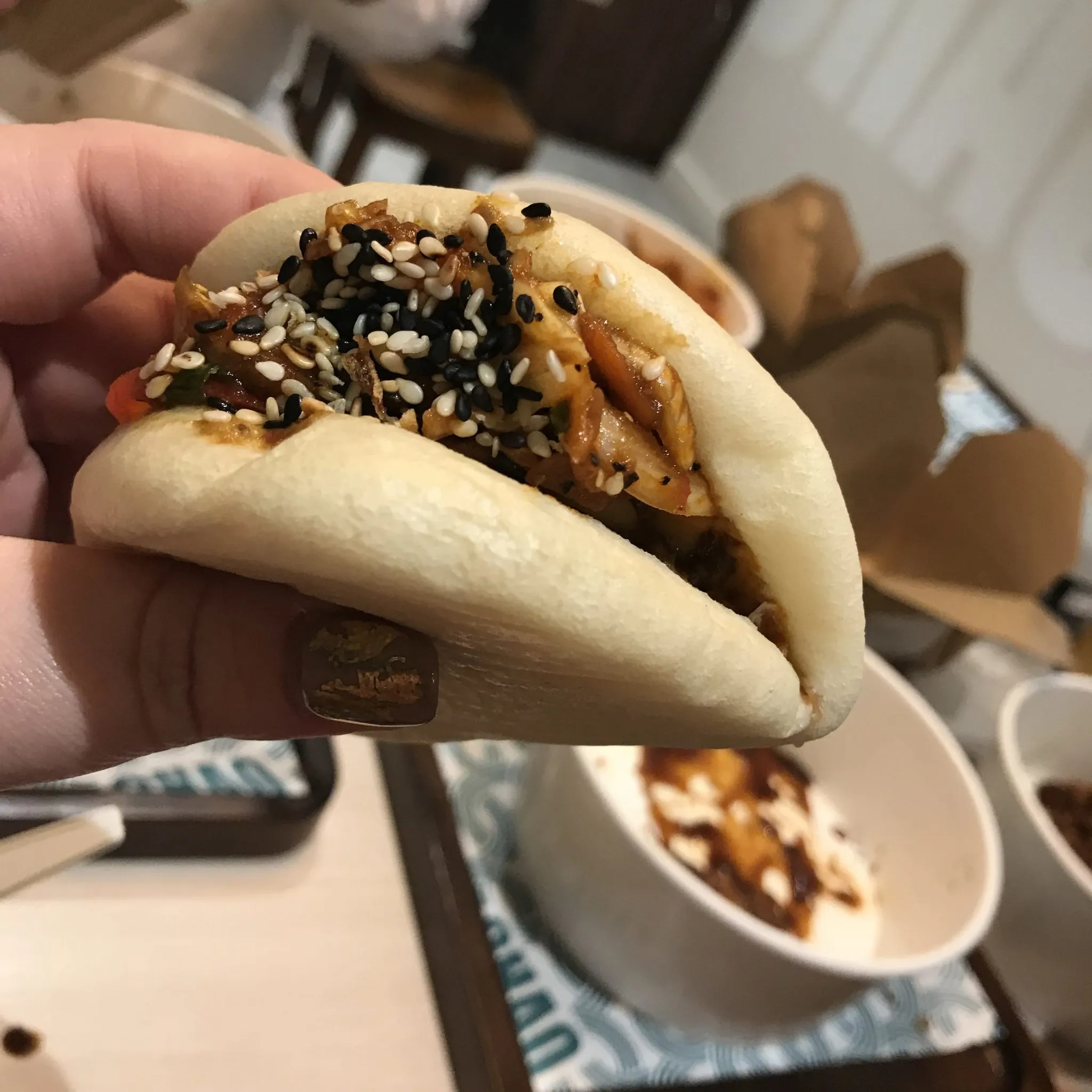
The pork belly bao (around £8.50 for two pieces) is the menu’s signature for a reason. The bun achieves what cheaper versions fail at — properly steamed, light but structurally sound enough to hold the filling without disintegrating on contact. The slow-braised pork has real depth, and the pickled cucumber and hoisin add brightness without overwhelming the meat. Order two portions between four people.
The prawn gyoza (£7.50 for five) are consistent and well-executed — thin-skinned, clean prawn filling, good sear on the base. Not exciting, but reliable. The black bean and chilli beef noodles (around £13) are the main course worth committing to: intensely savoury, genuinely hot rather than politely warm, with enough sauce to dress every strand. The smoked sea salt edamame (£4.50) is a small order that earns its keep as a pace-setter between more intense plates — notably better than the standard salted version found almost everywhere.
What to leave off your order
The crispy duck bao (£9 for two) is the dish that most regularly disappoints. The duck can run dry — particularly later in service — and the format suffers when that happens. The chicken katsu curry (£14.50) is well-made but feels like a crowd-pleaser placeholder; it’s what people order when they don’t know what else to pick, and it delivers comfort rather than anything memorable. At these prices, four small plates beat one katsu curry every time. The cold starters — tuna tataki (£11), king prawn ceviche-style dish (£12) — are priced high relative to their portion size. Cut here first if you’re managing the bill.
Chao Chao vs. Nottingham’s Asian Restaurant Scene
Before booking, it’s worth knowing where Chao Chao actually sits in Nottingham’s wider Asian dining landscape. The city has real options now, and they serve meaningfully different purposes.
| Restaurant | Style | Price per head (food + drinks) | Best for | Weakest at |
|---|---|---|---|---|
| Chao Chao | Pan-Asian sharing plates, modern | £35–50 | Group dinners, celebrations, cocktail programme | Quiet dinners for two, specialist ramen |
| Kushi-Ya | Japanese skewers and small plates | £28–40 | Date nights, precise Japanese flavour | Large groups (smaller venue) |
| Yuzu | Japanese, ramen-focused | £18–28 | Ramen quality, solo dining, casual meals | Group occasions, atmosphere |
| Kung Fu Kitchen | Traditional Chinese | £15–25 | Large groups, value, classic dishes | Modern presentation, cocktails |
| Bonsai Kitchen | Sushi-focused Japanese | £30–45 | Sushi quality, date nights | Non-sushi options, group sharing format |
Chao Chao is the most expensive option at the upper range and not necessarily the best at any single specific thing. Kushi-Ya has more precise Japanese cooking. Yuzu has better ramen. Kung Fu Kitchen gives you more volume for the money. Bonsai Kitchen wins on sushi quality specifically.
But Chao Chao does something none of the others manage as well: it combines a genuinely good cocktail programme (lychee martinis and yuzu sours at £10–12, consistently above the Nottingham average) with a menu that accommodates varied dietary preferences across a table of eight without anyone getting stuck, all inside a room that handles group dining without feeling cramped or loud in the wrong way. That combination — not any single standout dish — is the real argument for booking it over the alternatives.
Clear verdict: if the brief is best Japanese food in Nottingham, go to Kushi-Ya. If the brief is best ramen, go to Yuzu. If the brief is modern pan-Asian group dinner in a room that actually looks good, Chao Chao has the category largely to itself in this city.
The Honest Verdict on Value
Chao Chao earns its price — but only when you use the menu correctly. Come with three or more people, order eight to ten dishes across the table, add cocktails, and £40–45 per head feels justified by the end of the night. Come as a couple, order two mains each instead of sharing, and that same spend will feel expensive for what actually lands on the table. The menu is built for volume and variety. That’s not a flaw — it’s a design choice you need to factor in before you sit down.
Four Mistakes First-Time Visitors Make at Chao Chao
Most underwhelming visits to Chao Chao share one or more of these patterns. Knowing them before you go changes the outcome.
- Arriving on a Friday or Saturday without a reservation. Chao Chao fills up consistently on weekend evenings, and the venue size means walk-ins get turned away with some regularity. Book at least four days ahead for Friday or Saturday nights. Mid-week visits — particularly Tuesday and Wednesday — are noticeably calmer: service is less stretched, the kitchen has more time per table, and the room is actually easier to have a conversation in. If you have flexibility, mid-week is the smarter call.
- Ordering per person instead of sharing properly. The sharing plate format isn’t optional decoration — it’s structural. Each person picking their own dishes and eating them individually means spending more, getting less variety, and missing the point of the menu entirely. The right approach: the table orders collectively, picks eight to ten dishes between four people, and lets food arrive as it comes. Trying to impose a conventional starter-main structure on this menu produces a worse result every time.
- Skipping the small plates to go straight to the mains. First-timers often treat the bao and dim sum section as optional starters and load up on the wok dishes instead. That’s backwards. The pork belly bao, the prawn gyoza, and the steamed dim sum options are where the kitchen is most precise and consistent. Order three or four small plates before you consider the larger mains. The mains are good. The small plates are better.
- Judging it against the wrong standard. Chao Chao is not trying to replicate a specific regional Chinese cuisine or a traditional Japanese izakaya, and holding it to those benchmarks produces an unfair read. Arriving expecting the depth of a dedicated Sichuan restaurant or the precision of a proper omakase and then finding it insufficiently “authentic” is a misreading of the concept. Urban Oriental Kitchen means exactly what it says: a modern, city-facing interpretation of Asian cooking designed for a broad audience. If deep regional specificity is the goal, Kushi-Ya for Japanese or a specialist Cantonese restaurant elsewhere in the East Midlands is the right choice. If the goal is a vibrant, quality group dinner with an Asian-leaning menu and a good drinks list, Chao Chao is correctly positioned for that.
Who Should Book Chao Chao (and Who Should Go Elsewhere)
For a group celebration or occasion dinner in Nottingham, Chao Chao is the best pan-Asian option in the city right now. That’s a clear position, and it comes with an equally clear qualifier: the experience scales with group size. A table of six for a birthday? Book without hesitation. A quiet weeknight dinner for two on a Friday when the room is full and the floor team is managing thirty covers? You’ll likely wish you’d chosen somewhere smaller and calmer.
The room itself is part of what justifies the price point. Chao Chao has invested in the interior in a way that’s unusual for Nottingham dining at this level — moody lighting, considered materials, a design that sits somewhere between industrial and Asian-inspired without tipping into pastiche. On a busy evening with a full group, that atmosphere works with you. It creates a specific energy that a restaurant with strip lighting and laminated menus cannot replicate, regardless of how good the food is.
Service is the variable. When the restaurant isn’t full, the floor team is attentive and knowledgeable about the menu — genuinely useful when you’re trying to navigate a sharing plate list you haven’t seen before. When the restaurant is full on a busy Friday, wait times between dishes stretch and check-ins become less frequent. The kitchen sends food as it’s ready, which means gaps can open up between courses. Factor that in if you’re going with a group that runs hungry.
The menu’s breadth is genuinely useful for large tables with mixed dietary requirements. One person eating vegetarian can order across the dim sum and vegetable wok sections without compromise. Someone after a bigger protein-heavy plate can go to the beef noodles. That range has real practical value when you’re feeding eight people with different preferences — something a more tightly focused restaurant like Kushi-Ya or Bonsai Kitchen can’t offer in the same way.
Book Chao Chao for: birthdays, work social dinners, celebrations where the room and the drinks list matter as much as the food, and any occasion where you need a menu that genuinely works for a varied group. Don’t book it for: a quiet dinner for two, an occasion where ramen or sushi quality is the primary goal, or a budget night out where the per-head spend is a real constraint.
The number of people you bring determines almost everything about your experience here.