

A single hide of high-quality full-grain leather contains a dense matrix of approximately 25,000 to 50,000 collagen fibers per square millimeter. This biological architecture provides a level of puncture resistance and structural integrity that modern synthetic textiles, despite their rapid advancement, have yet to fully replicate in a lab. While the outdoor industry has largely shifted toward lightweight mesh and TPU overlays, the leather boot remains the definitive choice for those who view their footwear as a long-term investment rather than a seasonal consumable. A well-maintained pair of leather boots can outlast five pairs of synthetic hikers, making the higher initial cost a matter of mathematical logic rather than mere nostalgia. This longevity is not just about the material itself but about the way leather interacts with the human foot over hundreds of miles, eventually conforming to the unique contours of the wearer in a way that plastic polymers never will.
Comparing Full-Grain vs. Nubuck Leather Tanning for Trail Durability
Understanding the distinction between full-grain and nubuck leather is the first step in identifying which boot suits your specific environment. Full-grain leather is the highest quality available, utilizing the entire thickness of the hide without removing the outer layer. This outer layer, known as the grain, is where the fiber density is highest. Because the grain remains intact, full-grain boots are naturally more water-resistant and significantly more resistant to abrasion from sharp granite or dense underbrush. This density, however, comes with a trade-off: weight and breathability. A 2.8mm full-grain upper is heavy and requires a substantial break-in period before the leather becomes supple enough for comfortable high-mileage days.
Nubuck leather, on the other hand, is essentially full-grain leather that has been sanded or buffed on the grain side to create a velvet-like surface. This process makes the leather softer and more flexible out of the box, which reduces the agonizing weeks of “breaking in” your boots. However, sanding the surface slightly compromises the natural water-repelling properties of the hide. While nubuck is still incredibly durable compared to synthetics, it is more prone to staining and requires more frequent application of conditioning treatments to maintain its integrity. For the casual day hiker, nubuck offers a perfect balance of comfort and toughness. For the off-trail explorer or the heavy-pack backpacker, the raw strength of full-grain is usually the smarter choice.
Best Heavy-Duty Leather Hiking Boots for Off-Trail Expeditions
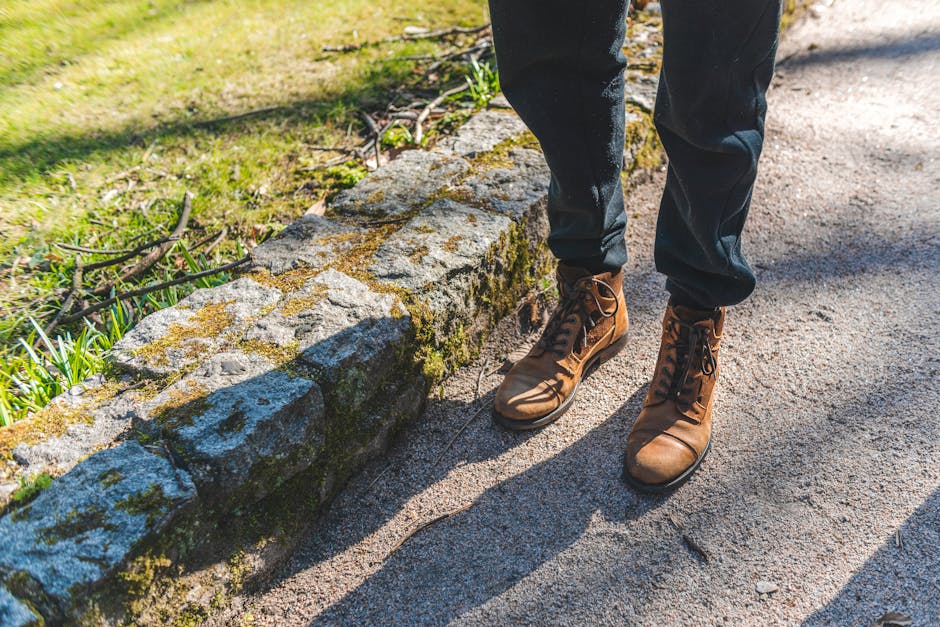
When the trail disappears and you are navigating scree slopes or dense forest floors, the structural support of a heavy-duty boot is non-negotiable. These boots are designed to protect the small bones of the foot from torsional stress and impact. They typically feature thick uppers and stiff midsoles that prevent the foot from wrapping around sharp rocks, which significantly reduces foot fatigue over long days.
Zamberlan 996 Vioz GTX (~$360)
The Zamberlan 996 Vioz GTX is often cited as the gold standard for full-grain leather boots. Crafted in Italy, it uses a 2.4mm Hydrobloc full-grain leather upper that is remarkably resilient. The boot features a Gore-Tex Performance Comfort lining, which provides a secondary waterproof barrier. Its Vibram 3D outsole is designed for high traction on steep descents.
- Pro: Exceptional leather quality that molds perfectly to the foot over time.
- Con: At nearly 1.7 lbs per boot, they feel heavy during the final miles of a long day.
Scarpa SL Active (~$350)
The Scarpa SL Active is a rare breed: a high-end leather boot that eschews a waterproof membrane in favor of natural breathability. Instead of Gore-Tex, Scarpa uses a Sherpa leather lining and a 2.8mm Sherpa calf leather upper. This makes it one of the most breathable heavy-duty boots on the market, though it requires regular waxing to stay waterproof.
- Pro: Incredible breathability for a leather boot; no membrane to fail or leak.
- Con: The break-in period is legendary and can take upwards of 50 miles.
Asolo TPS 520 GV Evo (~$360)
Asolo’s flagship leather boot is known for its “Triple Power Structure” (TPS) outsole, which uses three cylinders of varying density to absorb shock and provide energy return. The 2.8mm full-grain leather upper is nearly bombproof, making this a favorite for those carrying packs in excess of 50 pounds.
- Pro: Superior ankle support and lateral stability on uneven terrain.
- Con: The midsole is quite stiff, which can feel clunky on flat, paved approach trails.
The Trade-off Between Breathability and Waterproofing in All-Leather Construction
The physics of moisture management in a leather boot is a complex balancing act. Leather is naturally porous, allowing a small amount of vapor to escape. However, most modern leather boots include a waterproof/breathable membrane like Gore-Tex. While this prevents external water from entering, it inevitably restricts the exit of internal moisture (sweat). In cold, wet environments, this trade-off is essential. In hot, arid climates, a Gore-Tex lined leather boot can feel like a portable sauna for your feet, leading to maceration and blisters. This is why some purists still seek out leather-lined boots without membranes.
The “breathability” of a leather boot is largely determined by the tanning process and the thickness of the hide. Chrome-tanned leathers, which are standard in the industry, are treated with chemicals to make them soft and heat-resistant. This process can sometimes clog the natural pores of the leather. High-end manufacturers often use proprietary treatments, like Zamberlan’s Hydrobloc, to maintain water resistance without completely sealing the hide. If you frequently hike in temperatures above 80°F, you must prioritize moisture-wicking wool socks to compensate for the limited airflow inherent in leather construction. The sock is the engine that pulls moisture away from the skin and into the boot’s lining, where it can eventually evaporate through the leather upper.
Best Lightweight Leather Boots for Day Hiking and Mixed Terrain
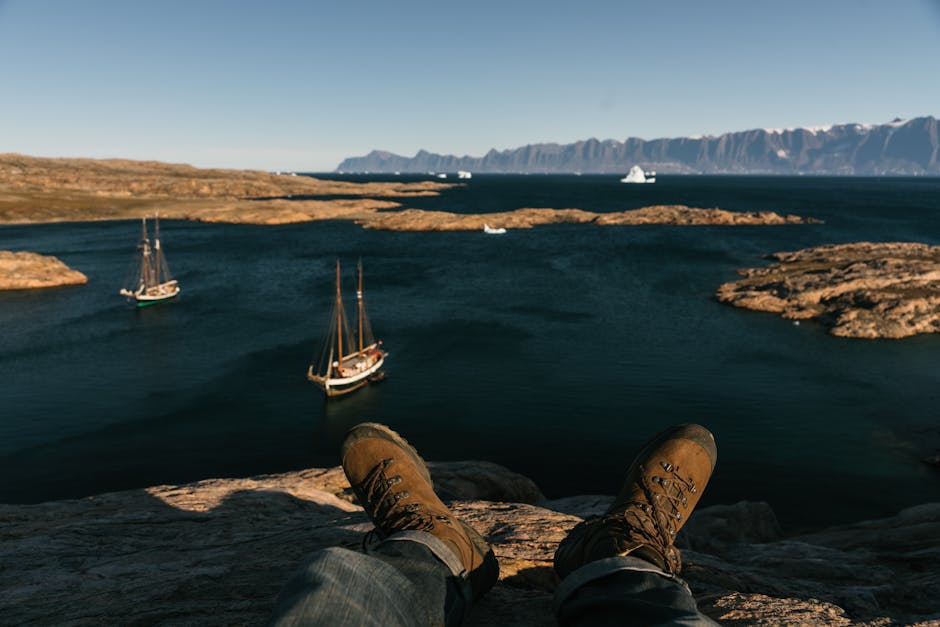
Not every hiker needs a three-pound boot designed for the Alps. For many, a lightweight leather boot provides the protection of natural materials without the crushing weight of a traditional mountaineering boot. These models often utilize nubuck or thinner full-grain leathers and more flexible midsoles to allow for a more natural gait.
Lowa Renegade GTX Mid (~$255)
The Lowa Renegade is perhaps the most popular leather boot in the world. It uses a nubuck leather upper and a Monowrap frame construction that reduces weight while maintaining stability. It is famous for its out-of-the-box comfort, requiring almost no break-in period.
- Pro: Very lightweight and flexible; feels more like a sneaker than a boot.
- Con: The polyurethane (PU) frame is injected rather than welted, meaning it cannot be easily resoled once the tread wears down.
Danner Mountain Light (~$440)
An icon of American craftsmanship, the Danner Mountain Light features a one-piece leather upper. This design is crucial because it eliminates seams, which are the most common failure points in any boot. It uses a stitch-down construction, which allows the boot to be resoled multiple times over its lifespan.
- Pro: Timeless aesthetic and fully resoleable construction.
- Con: The included footbed is quite flat and offers minimal arch support for the high price.
Assessing Sole Construction: Why the Outsole Matters as Much as the Upper
A leather upper is only as good as the platform it sits upon. When evaluating a boot, you must look closely at the midsole and the outsole. Most high-quality leather boots use a Vibram outsole, a brand synonymous with durability and grip. However, the compound of the rubber varies. Some Vibram soles, like the Megagrip, are softer and stickier for wet rocks but wear down faster. Others, like the Mont compound, are harder and designed for longevity and cold-weather performance. If you plan on doing a lot of road walking or hiking on hard-packed trails, a harder compound will serve you better.
The midsole is the layer between the outsole and the upper, responsible for cushioning. In leather boots, you will typically find either EVA (Ethylene Vinyl Acetate) or PU (Polyurethane). EVA is lighter and softer, providing immediate comfort, but it has a “memory” and will eventually compress and lose its cushioning power—a process known as packing out. PU is heavier and firmer, but it does not compress over time. A PU midsole can last for a decade, whereas an EVA midsole might start to feel “dead” after 500 miles. For heavy-duty leather boots, PU is the superior choice for long-term support. However, be aware of hydrolysis: if PU boots are stored in a humid environment and not used for years, the midsole can crumble. Regular use actually keeps the PU healthy by squeezing out moisture.
| Model | Leather Type | Weight (Pair) | Resoleable? | Best For |
|---|---|---|---|---|
| Zamberlan 996 Vioz | Full-Grain (2.4mm) | 3.4 lbs | Yes | Backpacking |
| Lowa Renegade GTX | Nubuck | 2.4 lbs | No | Day Hiking |
| Danner Mountain Light | Full-Grain (One-piece) | 3.8 lbs | Yes | Style & Longevity |
| Scarpa SL Active | Sherpa Leather | 3.5 lbs | Yes | Rugged Trekking |
Maintenance and Longevity: How to Extend the Life of Leather Footwear
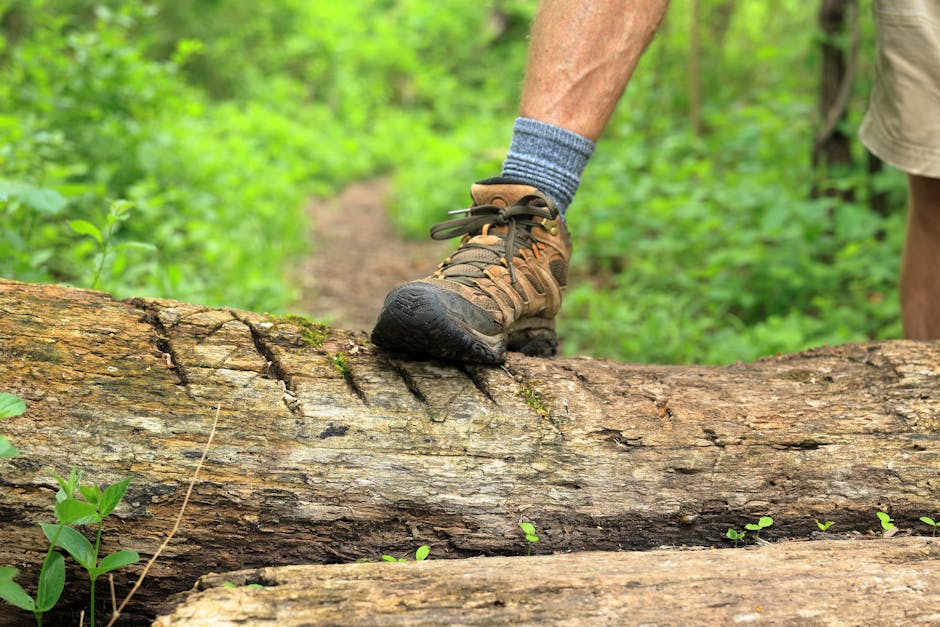
The primary reason leather boots fail prematurely is not a manufacturing defect, but neglect. Leather is a biological material that needs to maintain a specific moisture balance. If it gets too wet and stays wet, the fibers rot. If it gets too dry, the fibers become brittle and crack, especially at the flex points near the toes. Proper maintenance involves three stages: cleaning, conditioning, and waterproofing. After every hike, use a soft brush to remove mud. Mud is abrasive and, more importantly, it sucks the oils out of the leather as it dries.
Conditioning is the most misunderstood part of the process. You should use a dedicated leather conditioner (like Nikwax or Sno-Seal) only when the leather begins to look lighter in color or feels dry to the touch. Over-conditioning can actually make the leather too soft, causing it to lose the structural support you paid for. Avoid using mink oil or heavy greases on modern hiking boots, as these can soften the leather to the point where it no longer protects your ankles. Finally, store your boots in a cool, dry place. Never put them near a radiator or fire to dry them out; extreme heat will cause the leather to shrink and the adhesives in the sole to fail. Slow, ambient drying is the only way to preserve the shape and integrity of the boot.
Choosing Between Traditional Leather and Modern Synthetic-Hybrid Boots
Is leather always the right choice? Not necessarily. The decision depends on your priorities. If your primary goal is speed and weight reduction—perhaps you are trail running or fast-packing—synthetic boots or trail runners are superior. They require no break-in and drain water much faster if you are doing frequent river crossings. However, synthetics are essentially disposable. Once the mesh tears or the foam compresses, the boot is destined for a landfill. Leather represents a different philosophy: the philosophy of the “forever tool.”
A leather boot is a commitment to a specific type of movement. It is for the hiker who values stability over speed and durability over convenience. It is for the person who wants to know that their footwear won’t fail them in the middle of a ten-day wilderness circuit.
When you choose a leather boot, you are choosing a piece of gear that will change with you. It will scuff, it will darken, and it will eventually feel like an extension of your own body. In an era of fast fashion and planned obsolescence, there is something deeply satisfying about a pair of boots that looks better after five years of use than they did the day you bought them. Whether you opt for the classic Italian craftsmanship of a Zamberlan or the iconic American silhouette of a Danner, you are participating in a tradition of mountain travel that spans centuries. The weight on your feet is a reminder of the protection you carry, and for many, that trade-off is worth every extra ounce.