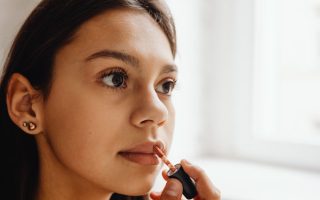

Do your lips feel tight before you even reach the bus stop, then split at the center by lunchtime? Cold air pulls moisture from the skin, while wind strips away the thin oil layer that protects your lips. A good routine needs more than a quick swipe of balm after the damage starts. You need to protect the surface before going outside, replace what eating and wiping remove, and know when cracked lips need a different plan.
Why do lips crack in cold wind?
Verdict: cold wind damages lips because the lip surface has less protective oil and fewer natural moisture-holding structures than the skin on your cheeks. The fastest fix starts with understanding that problem.
Why wind causes tight, flaky lips
Your lips have a thin outer barrier, and the red part has very little oil production compared with normal facial skin. Cold air lowers humidity, so water leaves the surface faster. Wind speeds up that loss by moving dry air across the lips. Saliva adds another problem: it wets the surface briefly, then evaporates and leaves the skin drier than before. Small cracks form first at the center or along the lower lip. Repeated talking, smiling, and eating pull those cracks open.
Why licking your lips backfires
Lip licking feels helpful for a few seconds, but saliva contains digestive enzymes and salts that can irritate already damaged skin. Each cycle leaves the lips wet, then drier once the moisture evaporates. Replace licking with a thin protective layer applied before the lips feel tight. That timing matters because a balm cannot fully prevent a split that has already been stretched open.
How to tell simple dryness from a bigger problem
Simple wind dryness usually affects the broad lip surface and improves within several days of consistent protection. Deep cracks at the corners, repeated peeling after several weeks, clusters of blisters, swelling, oozing, or a burning rash need more attention. Those signs can point to irritation, infection, allergy, or angular cheilitis rather than ordinary winter dryness.
What should you do before going outside?

Verdict: apply protection at least 10 minutes before exposure, then cover the lips from direct wind. Waiting until the skin stings is too late for the most comfortable routine.
Use this ten-minute pre-exit sequence
- Rinse away toothpaste, food, or salty residue with lukewarm water.
- Pat your lips dry instead of rubbing them with a towel.
- Apply a thin layer of a plain, fragrance-free balm or ointment.
- Give the first layer five minutes to settle rather than wiping it off.
- Add a second thin coat if you will spend more than 30 minutes outdoors.
- Pull a scarf or high collar over the lower half of your face when wind is strong.
Pack the routine, not a collection of balms
Carry one small tube in an inside coat pocket, where it will stay soft enough to spread. Add a clean tissue for wiping your mouth after meals. Avoid keeping the tube in an exposed outer pocket during freezing weather because a hardened balm creates drag and can pull at flakes. At home, keep a separate bedside tube so you do not forget the final overnight layer.
Protect lips from more than wind
Cold-weather sun still reaches your face, especially around snow and water. For skiing, hiking, or long drives, choose a lip product with broad-spectrum SPF 30 or higher if you can find one that does not sting. If sunscreen makes your lips burn, use a hat, scarf, and shade while you find a better formula.
Which lip balm ingredients work in cold wind?
Verdict: choose an occlusive, fragrance-free formula as your main barrier. Humectants can help, but they work best under a protective layer rather than alone in dry, windy air.
Know the three formula jobs
Occlusives sit on top of the skin and slow water loss. Petrolatum, mineral oil, and waxes fill that role. Humectants such as glycerin attract water, but a humectant-only product may leave lips feeling tight when the air is very dry. Emollients soften rough flakes and make the surface more flexible. For cold wind, the winning order is moisture already present on the lips, followed by a barrier that stays put.
| Formula type | Best use | Cold-wind verdict |
|---|---|---|
| Petrolatum-heavy ointment | Overnight sealing and severe dryness | Best first choice for cracked lips |
| Wax-based stick | Quick daytime application | Good for reapplying, but can drag when cold |
| Humectant-rich balm | Softening mild dryness | Use under an occlusive layer outdoors |
| Mint, cinnamon, or camphor balm | Cooling or tingling sensation | Skip it on split or sensitive lips |
Product picks with a clear job
Aquaphor Lip Repair, about $5 for a 0.35-ounce tube, is the strongest all-purpose pick because its ointment texture stays protective through wind and overnight wear. La Roche-Posay Cicaplast Lips, about $9 for a 0.4-ounce tube, is the better choice for people who dislike a greasy finish and want a fragrance-free barrier balm. Vaseline Lip Therapy Original, about $4 for a 0.25-ounce mini, wins on simple petrolatum protection and price. None needs to be spread in a thick, sticky layer; a coating about the size of a grain of rice is enough for both lips.
How often should you reapply lip balm outdoors?

Reapply before discomfort, not after the lips start burning. Put on a thin layer before leaving home, refresh it after eating or wiping your mouth, and reapply every 30 to 60 minutes during sustained exposure to strong wind; that simple schedule keeps the barrier intact through the day.
If you spend most of the day indoors, three applications may be enough: morning, after lunch, and before bed. If you ski, cycle, walk a dog, or work outside, use the shorter interval because wind, speech, drinks, and facial coverings remove balm quickly. Do not scrape away every flake before reapplying. A few soft flakes can lift naturally, while picking can create a fresh cut.
Use a mirror for the first application so the corners and center receive coverage. After that, apply a thin swipe and press your lips together once. Repeated rubbing spreads the product away from the places that crack first. If your balm disappears within minutes, switch to a more adhesive ointment rather than applying five layers of a light stick.
Which lip balm mistakes make chapping worse?

Verdict: the biggest mistake is chasing a pleasant sensation instead of building a steady barrier. Cooling, tingling, and strong flavor can feel active while irritating already cracked skin.
The mistakes that matter most
- Using mint or cinnamon on split lips. Burt’s Bees Beeswax Lip Balm, about $4 for a 0.15-ounce stick, is popular and portable, but its peppermint flavor can sting sensitive or cracked lips. It is a poor rescue pick when the surface burns after application.
- Scrubbing flakes away. Sugar scrubs and toothbrush exfoliation can remove the fragile surface that is trying to close. Stop exfoliating until the lips stay comfortable for several days.
- Applying a thin stick once in the morning. A single application cannot survive breakfast, coffee, wiping, and a windy commute. Carry the product and use the timing plan instead.
- Changing products every day. Switching between five formulas makes it hard to identify an irritant. Use one plain formula for a full week unless it causes burning, itching, or a rash.
- Using medicated balm as a daily habit. Dr. Ask a pharmacist or clinician before using it repeatedly, especially on children.
- Ignoring the rest of the face. Nose wiping, drool, and a wet scarf can keep the skin around the mouth irritated. Pat rather than rub, change damp fabric, and keep the lip barrier separate from fragranced face products.
Which lip balm is best for cold windy days?
Verdict: Aquaphor Lip Repair is the best general pick for cold wind because it combines a low-fuss ointment texture with strong protection at a modest price. Choose La Roche-Posay Cicaplast Lips when you want a less greasy feel, and choose plain Vaseline when price and a simple ingredient approach matter most.
Compare the practical choices
| Product | Typical price | Best for | Clear verdict |
|---|---|---|---|
| Aquaphor Lip Repair, 0.35 oz | About $5 | Cracked lips and overnight use | Best overall cold-wind barrier |
| La Roche-Posay Cicaplast Lips, 0.4 oz | About $9 | Fragrance-sensitive users who dislike heavy grease | Best comfortable daytime balm |
| Vaseline Lip Therapy Original, 0.25 oz | About $4 | Simple petrolatum protection | Best budget choice |
| Burt’s Bees Beeswax Lip Balm, 0.15 oz | About $4 | Mild dryness when flavor is tolerated | Skip it on burning, split lips |
| Dr. Dan’s CortiBalm, 0.15 oz | About $10 | Specific inflamed lip problems | Use only with pharmacist or clinician guidance |
Make the final choice simple
For a windy commute, use Aquaphor Lip Repair before leaving and after lunch. For a family member who reacts to fragrance, use La Roche-Posay Cicaplast Lips. For a child or adult who needs the simplest low-cost option, use plain petrolatum and focus on frequent reapplication. The routine matters more than the fanciest tube: protect before exposure, refresh after the barrier is removed, and get help when the pattern no longer looks like simple dryness.