
A shallow splash area can cool children by several degrees in minutes, but the best backyard water play setup is not the biggest one. It is the one you can supervise, drain, clean, and repeat without turning Sunday evening into a chore.
Build a Safe Water Zone in 20 Minutes
Best verdict: create one shaded, shallow play zone with a clear edge, a towel station, and an adult within arm’s reach of young children. This arrangement gives kids several ways to play without spreading hoses, toys, and standing water across the entire yard.
Pick the right location first
Choose a flat patch of grass or a clean patio that sits within easy reach of the house. Avoid slopes, concrete with cracks, garden tools, grill areas, and spots under low branches. Put the play area within your normal line of sight from the kitchen or seating area, but do not treat a window as supervision. A child can slip or put their face under water in seconds.
Use a patio umbrella or a canopy for shade, then check the ground temperature with your hand before children start. Dark paving can become hot enough to hurt bare feet. Place a rubber outdoor mat beside the water zone so children do not run directly from wet surfaces onto smooth tile.
Set up three simple stations
Make the space easy to manage by dividing it into three stations: water play, dry toys, and towels. Use a plastic storage bin for cups, funnels, bath boats, and foam letters. Put towels and dry clothes on a chair several steps away. Keep drinking water in a separate cooler so children do not confuse the play water with something safe to drink.
Fill tubs only a few inches deep. Empty them as soon as the activity ends, turn them upside down, and store small toys indoors. For babies and toddlers, stay close enough to touch them without taking a step. The winning setup is the smallest one that keeps everyone cool, visible, and moving.
Which Water-Play Gear Gives the Most Fun per Dollar?
For mixed ages, choose a water table or splash mat before buying an inflatable pool: the play lasts longer, the water stays shallow, and cleanup takes less time.
Use this planning table
| Item | Useful details | Planning price | Best use |
|---|---|---|---|
| Step2 Rain Showers Splash Pond Water Table | About 31.5 inches high with a raised basin and rain-effect accessories | $79.99 | Preschool pouring and sensory play |
| Little Tikes Spiralin’ Seas Waterpark Play Table | About 29 inches high with a spiral tower, cups, and spinning water features | $59.99 | Two children playing together |
| Banzai Sprinkle & Splash Play Mat | About 68 inches wide with a shallow sprinkler rim | $24.99 | Open-ended cooling for toddlers |
| Intex Crystal Blue Easy Set Pool | 10 feet wide by 30 inches deep; roughly 1,018-gallon capacity | $99.99 | Older children with close adult supervision |
These are planning prices, not promises of a fixed store price. Seasonal sales and local stock can change the total. The Banzai Sprinkle & Splash Play Mat is the clearest low-cost choice for a one-afternoon activity because it uses little water and folds away quickly.
Match the gear to the children
For children under three, the Step2 table is the strongest choice because its height keeps most activity above the ground and its basin does not invite swimming. The Little Tikes table works better for siblings who want a shared game, such as racing cups down the spiral. The Intex pool offers the most room, but it also brings the most work: filling, testing, emptying, drying, and checking the liner.
Skip the pool if you cannot drain it after every session or keep a dedicated adult beside it. A water table may look less exciting, but it wins for families who want repeatable weekend fun without a full yard reset.
Run Five Water Games Without Buying More Toys
Best verdict: use ordinary kitchen and recycling items to create games with a clear start, a simple rule, and a short finish. Children stay engaged longer when each activity changes the way they move water instead of adding another plastic toy.
Follow this five-game sequence
- Pour-and-predict: place three cups of different sizes beside a shallow tub. Ask children to guess which cup fills the fastest, then test the guess with the same scoop count.
- Sponge delivery: put two empty bowls several feet from the water. Players soak a sponge, carry it with both hands, and squeeze it into a bowl. The first team to reach a marked line wins.
- Ice rescue: freeze plastic animals or large waterproof objects inside ice cubes. Give children warm water, spoons, and a small cup. They must melt or chip away the ice without throwing it.
- Color sorting: add a few drops of washable food coloring to separate cups, then provide white plastic lids or large foam shapes for sorting. Keep colored water away from porous paving and light clothing.
- Target splash: draw circles on the ground with sidewalk chalk. Children toss wet sponges toward the circles and score one, two, or three points based on distance.
Keep the pace calm
Run each game for five to eight minutes, then switch roles. This prevents one child from becoming the permanent pourer or scorekeeper. Give older children jobs such as counting scoops, marking points, or refilling one small pitcher. Younger children can focus on carrying, squeezing, and sorting.
Use only large pieces that cannot fit fully inside a child’s mouth. Avoid glass, sharp bottle edges, rubber bands, and small water beads. The best homemade game is one that can be stopped instantly when the water becomes cloudy, the ground gets slippery, or children start running.
Fix the Five Problems That Ruin Backyard Water Play
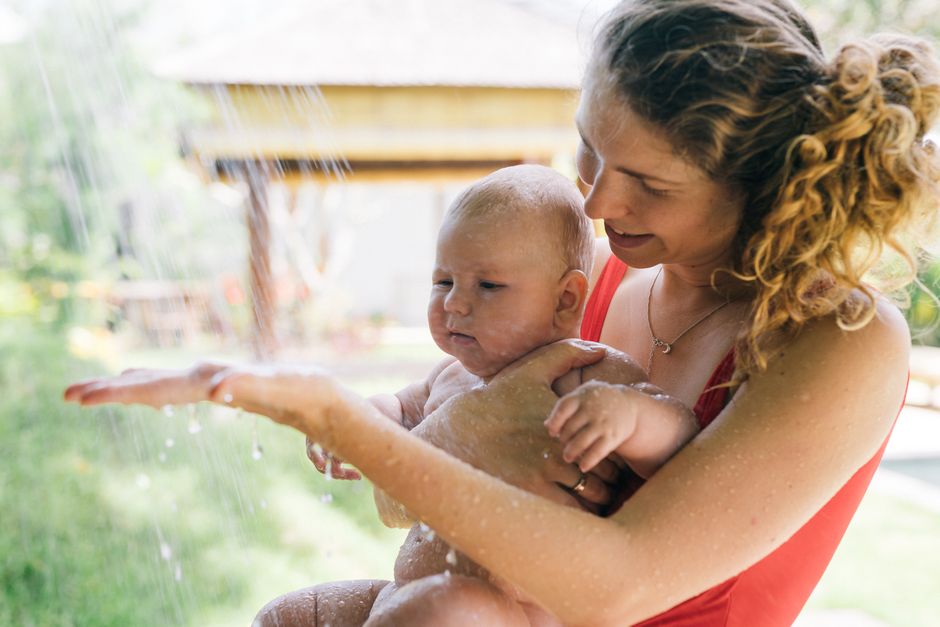
My strongest recommendation is to plan for cleanup before the first cup hits the ground. Most backyard water sessions fail because the setup ignores wet feet, dirty water, shade, or the final ten minutes of the day.
Prevent slips and overheated water
Place the activity on grass or use a textured outdoor mat on hard ground. Remove algae, leaves, and soap residue before play. Do not add bubble bath to a pool or water table; it creates slick surfaces and can irritate eyes. If children become flushed, quiet, dizzy, or unusually tired, stop the game, move them into shade, dry them, and offer drinking water.
Avoid the expensive and annoying mistakes
- Do not buy the Intex Crystal Blue Easy Set Pool for a toddler-only weekend. The 30-inch depth and 1,018-gallon capacity create more supervision and cleaning work than a shallow mat or table.
- Do not leave a Step2 Rain Showers Splash Pond Water Table full overnight. Empty it, wipe the basin, and store the accessories in a ventilated bin.
- Do not place a Banzai Sprinkle & Splash Play Mat on rough gravel or sharp concrete. The thin base can puncture, and the leak may not show until the sprinkler loses pressure.
- Do not rely on a pool cover as a substitute for an adult. Covers can sag, shift, or collect rainwater.
- Do not leave toys outside after sunset. Mosquitoes, dirt, and warm standing water turn a fun station into a cleaning problem.
For families with limited storage, the mat is the better purchase. For families with two preschoolers who play side by side, a water table is worth the extra shelf space. Choose the smaller tool when the larger one adds work without adding a new kind of play.
Backyard Water Play Questions Parents Ask
The best family plan uses shallow water, short sessions, and a repeatable cleanup routine. These answers settle the practical questions before the weekend starts.
How deep should backyard play water be?
Use only a few inches for tubs, trays, and splash mats. For babies and toddlers, an adult should stay within arm’s reach even when the water looks too shallow for swimming. Empty containers immediately after play because a child can fall into a small amount of water just as quickly as into a larger pool.
How much water does a family need?
Start with 2 to 5 gallons for pouring games, about 10 to 20 gallons for a small water table, and much more for an inflatable pool. Begin with less than you think you need. You can refill a pitcher in seconds, but you cannot easily undo a flooded patio or a muddy lawn.
What should children wear?
Use a swimsuit or quick-dry clothing, a brimmed hat, and water shoes with a textured sole. Apply broad-spectrum sunscreen as directed on the label and provide shade. Keep one dry outfit per child in a sealed bag so a wet shirt does not end the afternoon early.
When should a family skip water play?
Skip it during thunder, strong wind, extreme heat, poor air quality, or when an adult cannot supervise. Also skip the session if the yard has recently been treated with lawn chemicals or if the water equipment has cracked, grown mold, or developed a sharp edge.
The single most important takeaway is to choose a small, shaded water setup you can supervise closely and empty completely before the day ends.