
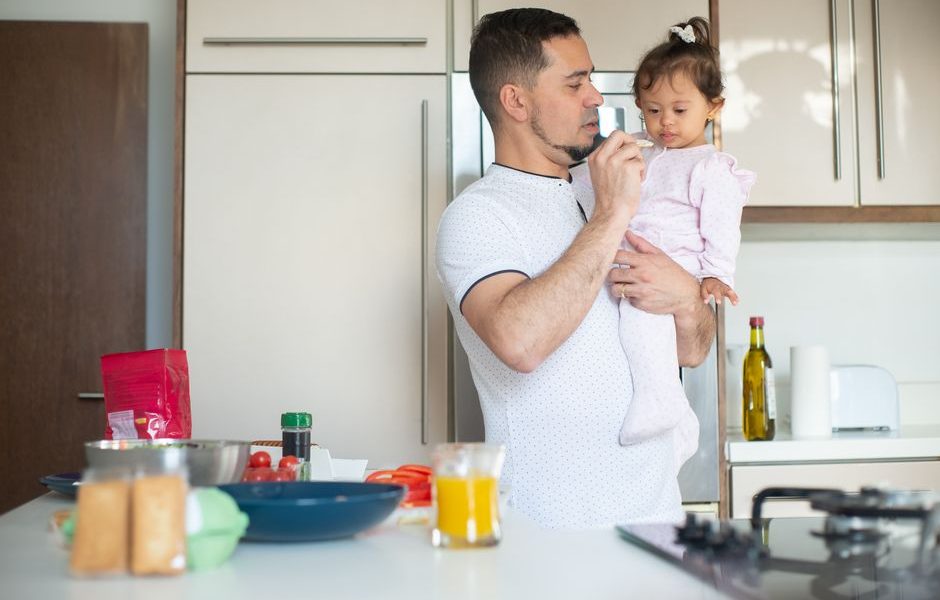
Most parents think a kid-made Father’s Day breakfast has to mean flour on the floor, burnt toast, and a father politely eating cold eggs. That only happens when children are given a recipe instead of a job.
After years of family breakfasts, I have found that the best morning is simple: kids do the visible, satisfying work, while an adult handles heat, sharp tools, and the final timing. Dad gets a breakfast that feels personal, and nobody has to wake up at 5 a.m. to make it happen.
A 45-minute Father’s Day breakfast plan kids can follow
Set the clock before anyone enters the kitchen
- Minute 0 to 5: An adult clears the counter, washes fruit, checks the oven, and puts every ingredient within reach. Children choose a card, drawing, or handwritten menu for the table.
- Minute 5 to 15: Kids measure dry ingredients, stir yogurt, wash berries, or spread softened butter on bread. Keep raw eggs and hot pans out of this first stage.
- Minute 15 to 25: An adult mixes anything that needs eggs and starts the oven or stovetop. Children add toppings, arrange fruit, and build a serving tray.
- Minute 25 to 38: The hot food cooks. Kids set napkins, pour juice into small cups, and make a place card for Dad. This is also the right time to wipe the counter instead of letting the mess grow.
- Minute 38 to 45: The adult checks doneness, transfers hot food, and handles the coffee. Children carry cool items and deliver the card.
The rule that keeps breakfast calm
Do not start cooking until every ingredient has been measured. I learned this after trying to crack eggs while a child searched for cinnamon and another child poured half a carton of milk into the bowl. Mise en place sounds fancy, but it simply means putting the ingredients in small bowls first.
This plan works because the children stay busy during the waiting periods. A breakfast that takes thirty minutes to bake can feel endless if nobody has a job. It feels short when the kids are decorating the table or mixing the topping.
The only kitchen upgrades I would buy for this morning
My strong opinion: do not buy a novelty children’s cooking set for one breakfast. Many sets include tiny tools that are hard to wash, awkward to hold, and quickly abandoned. Buy one useful item that solves a real problem, then use it for years.
Best low-cost helper: OXO Good Grips 3-Piece Prep Peeler Set
The OXO Good Grips 3-Piece Prep Peeler Set is listed at $14.99 and includes straight, serrated, and julienne peelers. I would use it for an older child with close supervision, mainly for peeling a banana or making cucumber ribbons. For children under eight, skip the peeler and give them a spreader instead. The verdict is simple: useful for supervised older kids, unnecessary for toddlers.
Best pan for a small baked breakfast: Nordic Ware Naturals Quarter Sheet
The Nordic Ware Naturals Nonstick Baker’s Quarter Sheet costs $17 on the manufacturer’s site and measures about 12.1 by 8.8 by 1.1 inches. Its smaller size suits baked French toast or oatmeal for two to four people. I prefer it to a giant sheet pan because children can help spread the mixture without reaching across a huge hot surface.
Best splurge only for regular cooks: ThermoWorks Thermapen ONE
The ThermoWorks Thermapen ONE is listed at $115, reads in under one second, and claims accuracy within 0.5 degrees Fahrenheit in key ranges. It is excellent for checking baked oatmeal or cooked sausage, but it is not a Father’s Day necessity. Do not buy it for a single breakfast. Buy it only if someone in the house cooks often and will use it after the holiday.
Three breakfasts that feel special without hard cooking
Banana pancakes with a topping bar
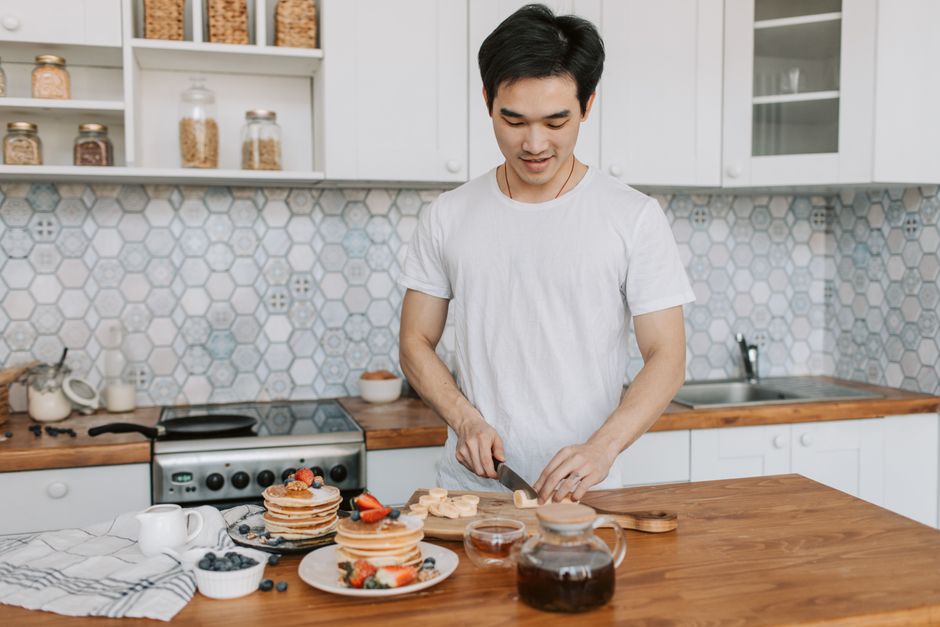
For four people, mash two ripe bananas with two eggs, then stir in 1 cup of milk, 1 1/2 cups of flour, 2 teaspoons of baking powder, and a pinch of salt. An adult cooks small pancakes on a greased skillet. Kids arrange sliced strawberries, blueberries, chopped pecans, chocolate chips, and yogurt in separate bowls. The topping bar makes a basic pancake breakfast feel like an event, and each child can build Dad’s plate differently.
Baked French toast that cooks while the table gets ready
Cut six slices of bread into rough cubes and place them in a greased small baking dish. Whisk four eggs with 1 1/2 cups of milk, 2 tablespoons of maple syrup, 1 teaspoon of cinnamon, and a pinch of salt. Pour it over the bread and let it sit for ten minutes. Bake at 350 degrees Fahrenheit for about 35 minutes, until the center looks set. Kids can tear the bread, whisk the cold mixture, and scatter berries over the top before baking.
Parfait plates for the youngest helpers
Set out plain or vanilla yogurt, granola, sliced bananas, berries, and a little honey for children over one year old. Kids layer the ingredients in clear cups or small bowls. This is my best choice for families with toddlers because it involves no heat and still looks festive. Add a handwritten label such as Dad’s Crunchy Cup or Blueberry Breakfast, and the meal feels made rather than simply poured.
Best overall pick: baked French toast gives older children the most meaningful preparation work, while parfaits are safest and easiest for preschoolers.
The mistakes that turn a sweet breakfast into a scramble
What usually goes wrong
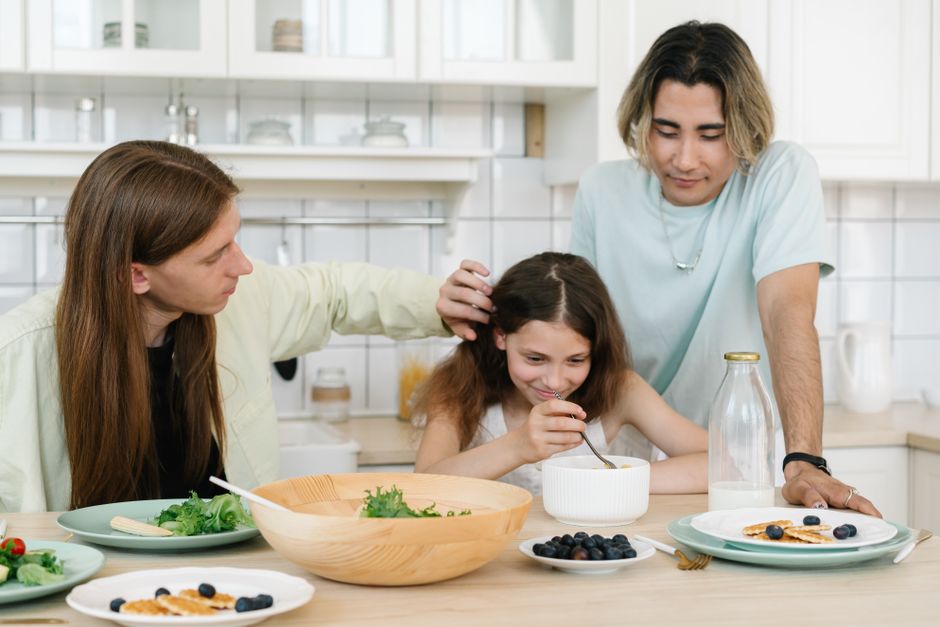
- Too many recipes: Make one main dish and one fresh side. Three cooked dishes create a timing problem before the children even start.
- Ingredients hidden in cabinets: Put everything on the counter first. A child cannot help with a recipe if they have to keep asking where each item is.
- Raw batter tasting: Keep a bowl of washed berries nearby so children have something safe to snack on while they cook.
- Too much decoration: Sprinkles, sauces, and fruit can bury the food. Give each child two toppings and let the breakfast stay recognizable.
- Serving straight from the oven: Hot dishes need an adult transfer and a cooling period. Children can set the table while the food rests.
- Expecting a perfect plate: A crooked pancake is not a failure. Correcting every uneven edge tells a child that helping is risky.
When not to cook from scratch
If Dad wakes early, the family has a tight schedule, or a child is already tired, use prepared muffins, fruit, and yogurt. A store-bought breakfast can still become personal when children arrange it, write the menu, and serve it with a card. I would choose a calm assembled breakfast over homemade pancakes made through tears.
The clear fix is to lower the cooking ambition before anyone gets hungry. Hungry children rush, adults become short-tempered, and the celebration disappears.
Father’s Day breakfast questions parents actually ask
What can a four-year-old make for Father’s Day?
A four-year-old can assemble a yogurt parfait, tear bread for French toast, wash berries with help, or pour pre-measured ingredients into a bowl. Give one instruction at a time and keep the work on a low, stable surface. My pick for this age is the parfait because the child can complete nearly every step.
How do kids help with pancakes without touching the stove?
Children can mash bananas, whisk the cold batter, choose toppings, and place finished pancakes on a serving plate. An adult handles the skillet and uses a clean spoon to portion each pancake. Do not let a child lean over the pan to watch the bubbles; the adult can show the finished pancake after it cools.
What is the easiest Father’s Day breakfast for a large family?
Choose baked French toast or baked oatmeal in two dishes. The ingredients can be mixed ahead, the dishes cook together, and children can help with the cold preparation. Avoid individual omelets because they tie the cook to the stove while everyone else waits.
Should kids serve breakfast in bed?
Only if the tray is light, the drinks are cold, and the path is clear. For younger children, a table breakfast is safer and less stressful. Dad will enjoy a handmade card and a warm plate at the table more than a spilled glass on the stairs.
The best Father’s Day breakfast is the one children can help finish, Dad can enjoy while it is still warm, and the adults do not resent making.